
Our 147th entry in this blog is our trip to Sea Life in Nagoya, Japan. This is part of the Legoland Japan area where we went yesterday. After checking out from our hotel, we immediately visited the Sea Life aquarium. See? It is just located right in front of the Legoland theme park. We lined up early with other excited peeps for the day. First timers here!
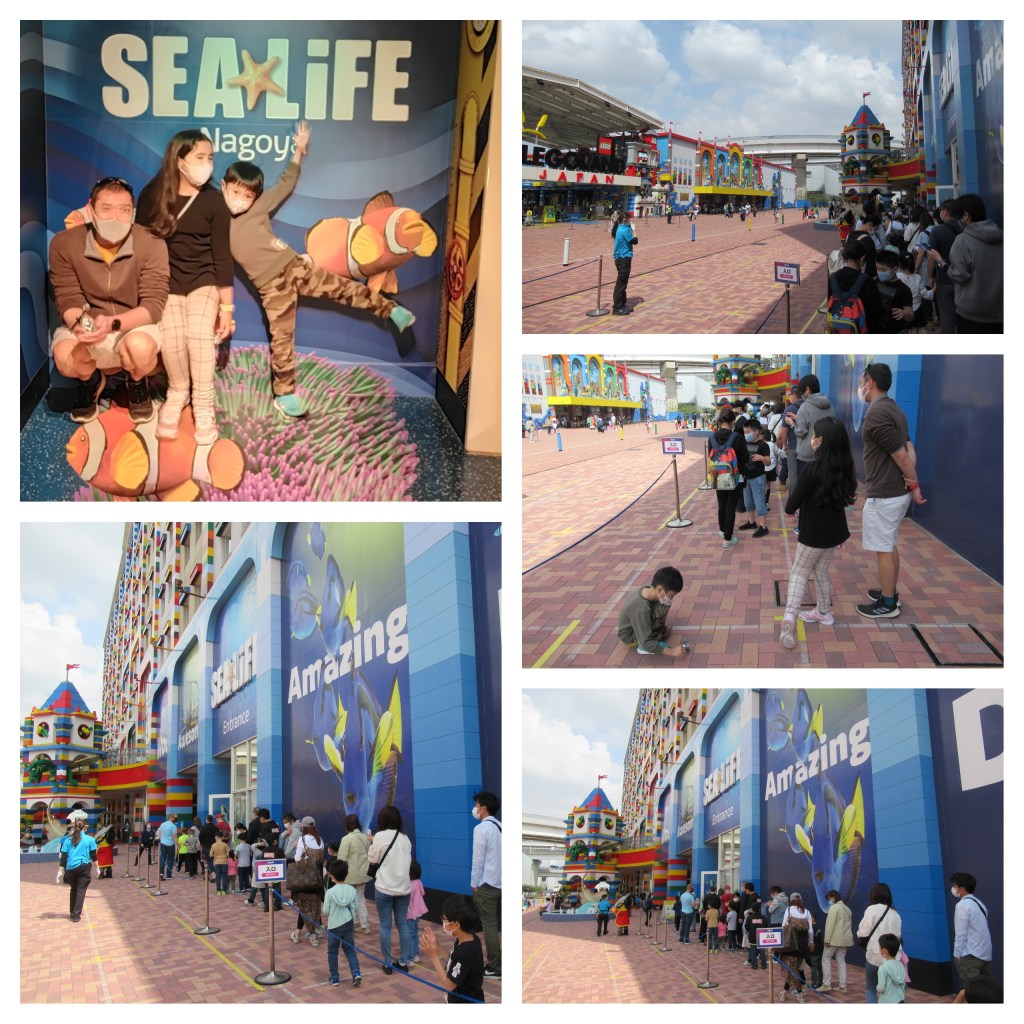
We love to visit aquariums. Aside from the fact that we do not know how to swim, (yet! hehe…) we love the idea that we get to see the sea creatures very very close. It’s just like swimming with them while still breathing oxygen. yay! 🙂

This is a unique aquarium as most of the designs are made out of Legos. Millions of Legos! Of course the fishes are real. 🙂 This area is the Shoaling Ring. This will allow you to see Yellow Tail Fusiliers swimming peacefully around the 360 degree circular tank.

This areas is the Kiso River. It has freshwater fishes at the Kiso river! You feel like you are under a hanami with colorful gold fishes under beautiful sakura tree. Ate Rei and Sai’s favorite fish is still Nemo. We are always excited to look for these clownfishes, and also its famous friend Dory. Did you know that clownfishes live in the poisonous tentacles of sea anemones? They are one of the only ocean creatures immune to this venom, and are protected by a thick layer of slimy mucus on their skin.
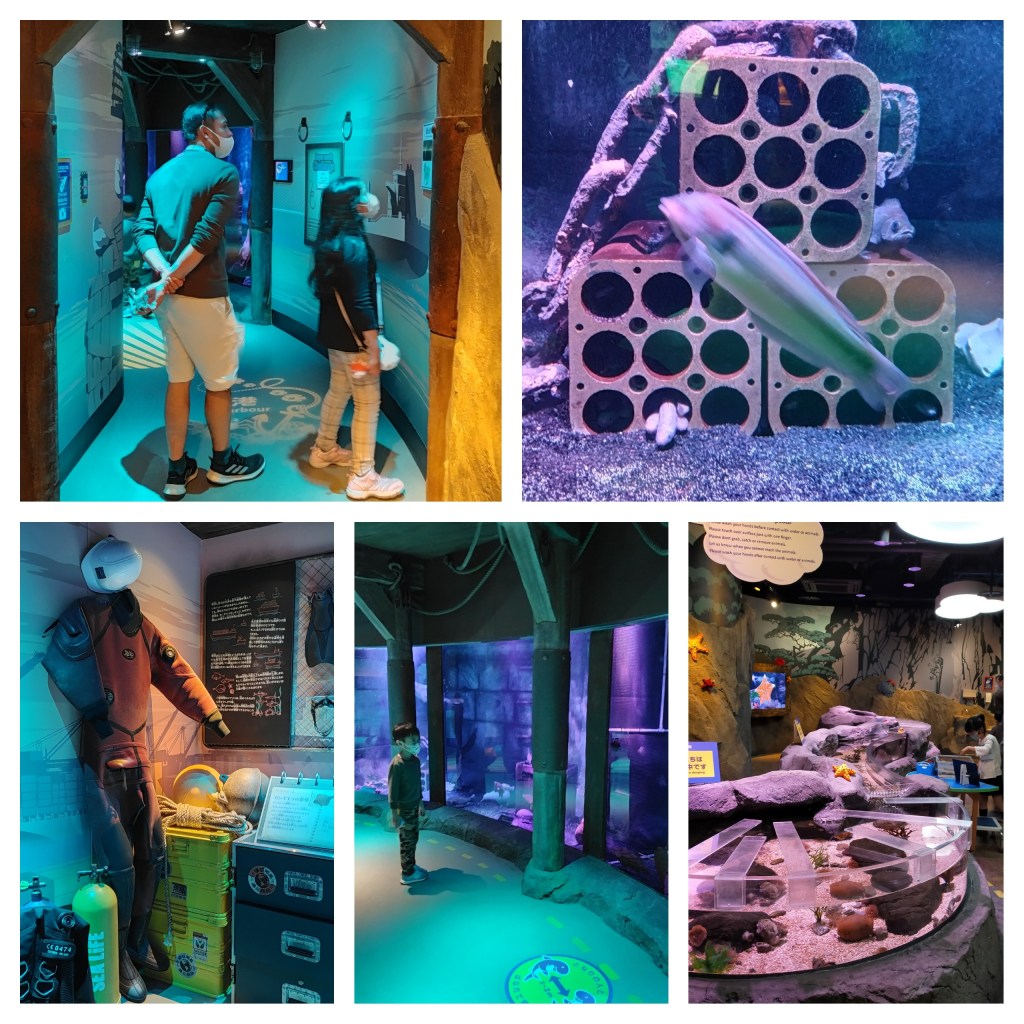
This area is the Rockpools. In here, you can stroke a starfish or tickle a sea anemone. But since we are still in pandemic due to Covid-19, no touching is allowed for now.
It may not be obvious in our pictures but another ocean creature that we find so mysterious is the octopus. It has three hearts, eight arms and a doughnut shaped brain. Yeah! They are well known for being very clever. They are sometimes very hard to see as they are the masters of hide and seek. As long as the gap is large enough for their eyeballs, then they can fit and hide!

This is the Seahorse Nursery and the Coral Reef area. The root of the mangrove is a safe place for seahorses which protect them from predators! Perhaps the coolest thing about this creature is that the males brood their babies! A male Seahorse has a brooding pouch on its belly into which a female can place her eggs. After a few weeks when the babies are ready, the male Seahorse gives birth. He rocks back and forth like a rocking-horse whilst the tiny baby seahorses pop out from a small hole in his tummy.
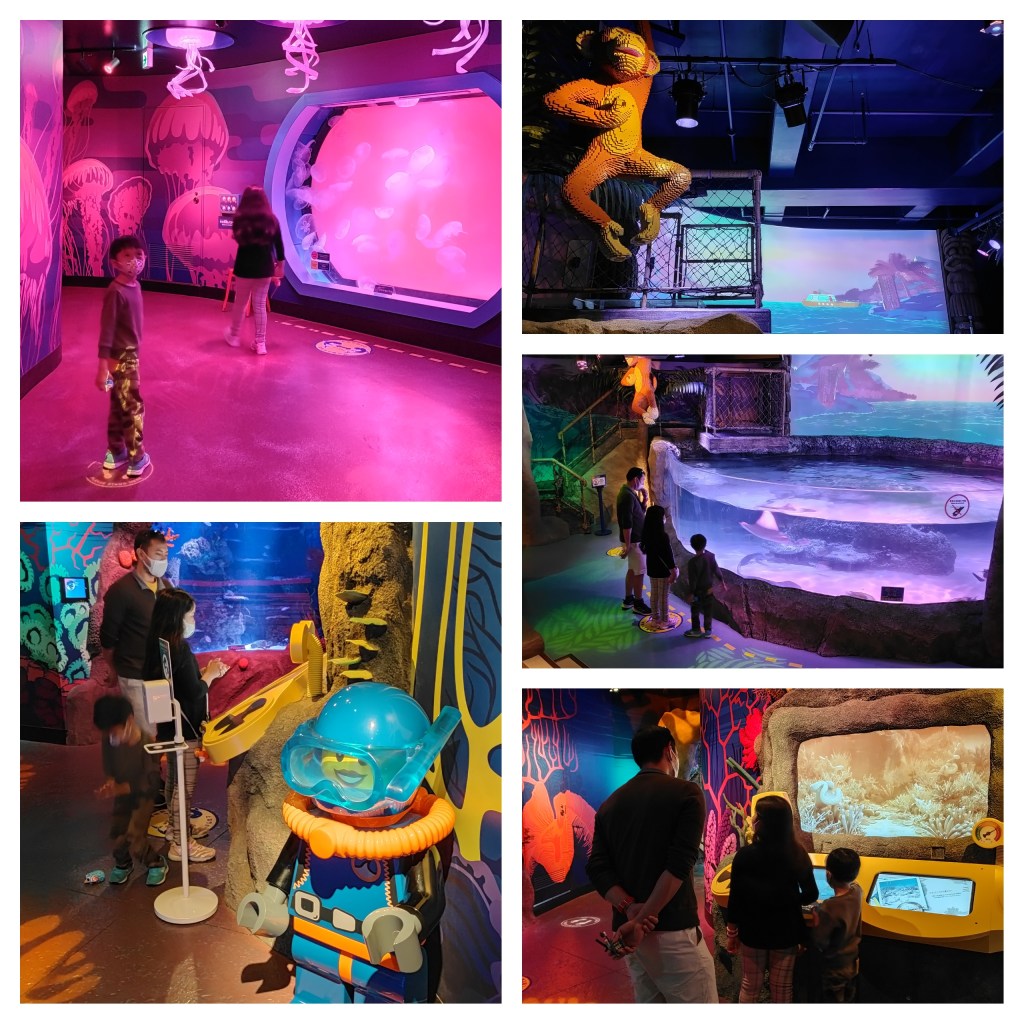
In the photo above, this trio is looking at some Rays. We are now in the Stingray Bay. Sting Ray’s closest relative is the shark. To swim they flap their fins like a bird. Did you know that rays are masters of disguise? Some change colour based on the colours of the seabed. With their flat body they can hide on the ocean floor to stay protected from predators.
There are also lots of jellyfish display in Sea Life. Jellyfish are older than all of our ancient reptiles. Scientists believe they first swam in our oceans around 500 million years ago! 🙂
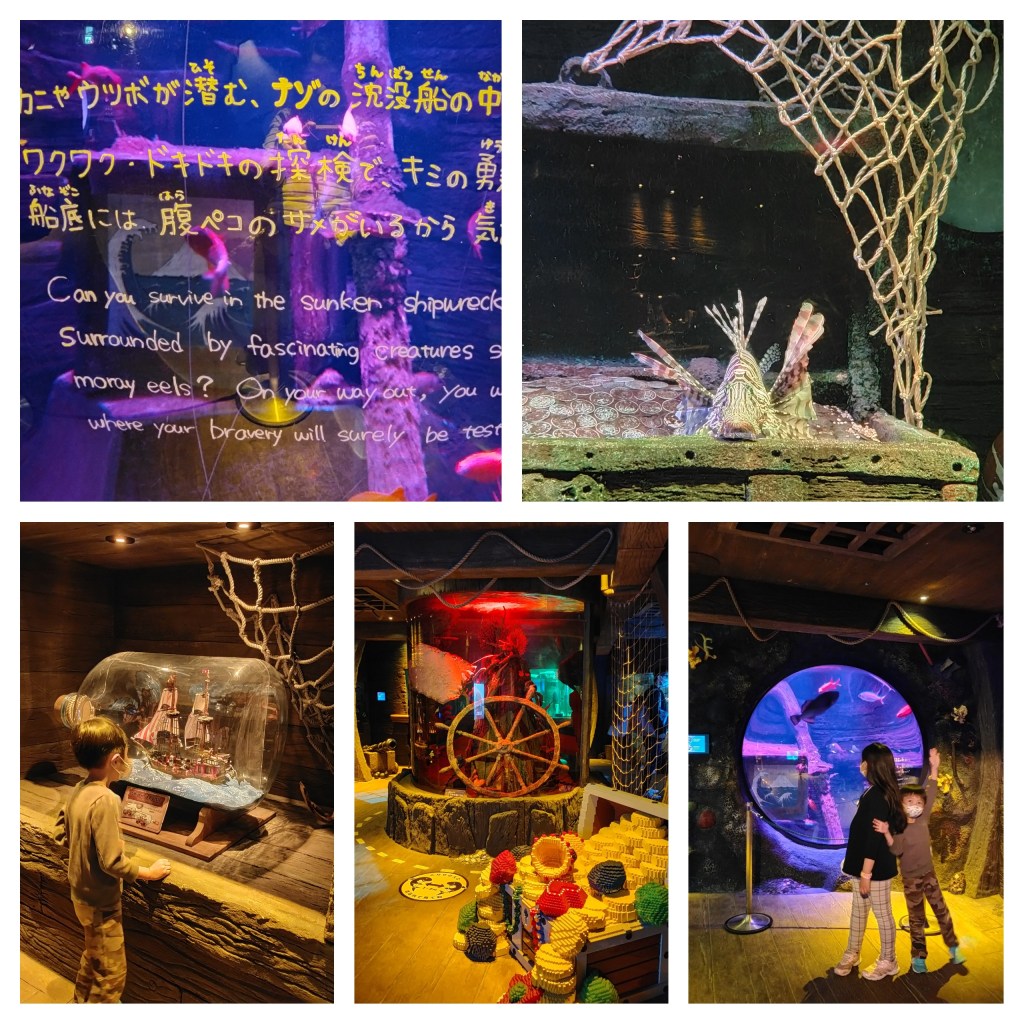
We are not just fascinated by the fishes but also with the Lego displays and design. We are always guessing how many bricks this design or display is using. hehe 🙂 We are now in the Sunken Shipwreck area.
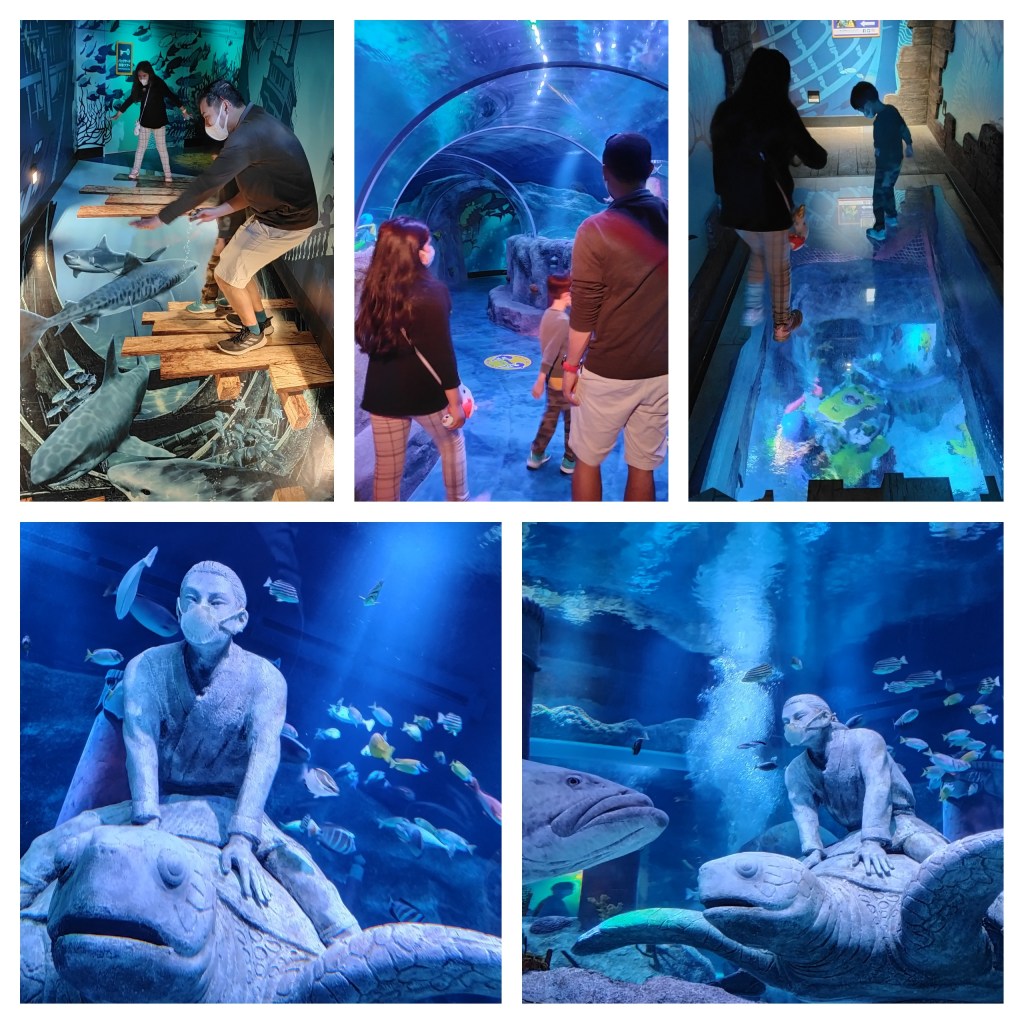
The designs in different areas are all fascinating. Going through a tunnel, you find yourself in lavishly colorful worlds such as that of the Japanese fairy tale zone of Urashima Taro’s visit to the dragon’s underwater palace, a zone where you proceed through a sunken ship, a tropical ocean zone with tons of rays swimming all around, a zone in which you can touch inhabitants of the sea, and more.
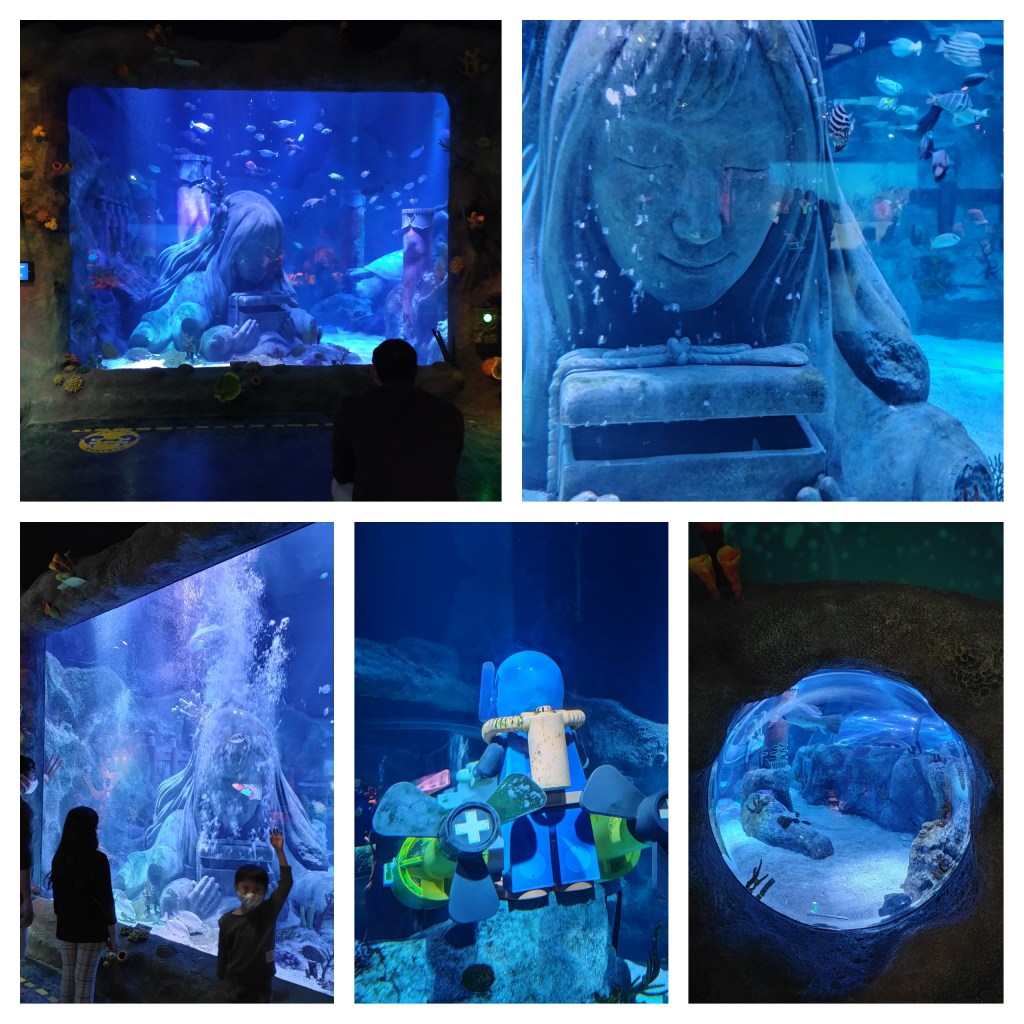
This is the Ryugu-jo area. Enter the world of Urashima Taro through the ocean tunnel and discover a variety of tropical fish and sharks!
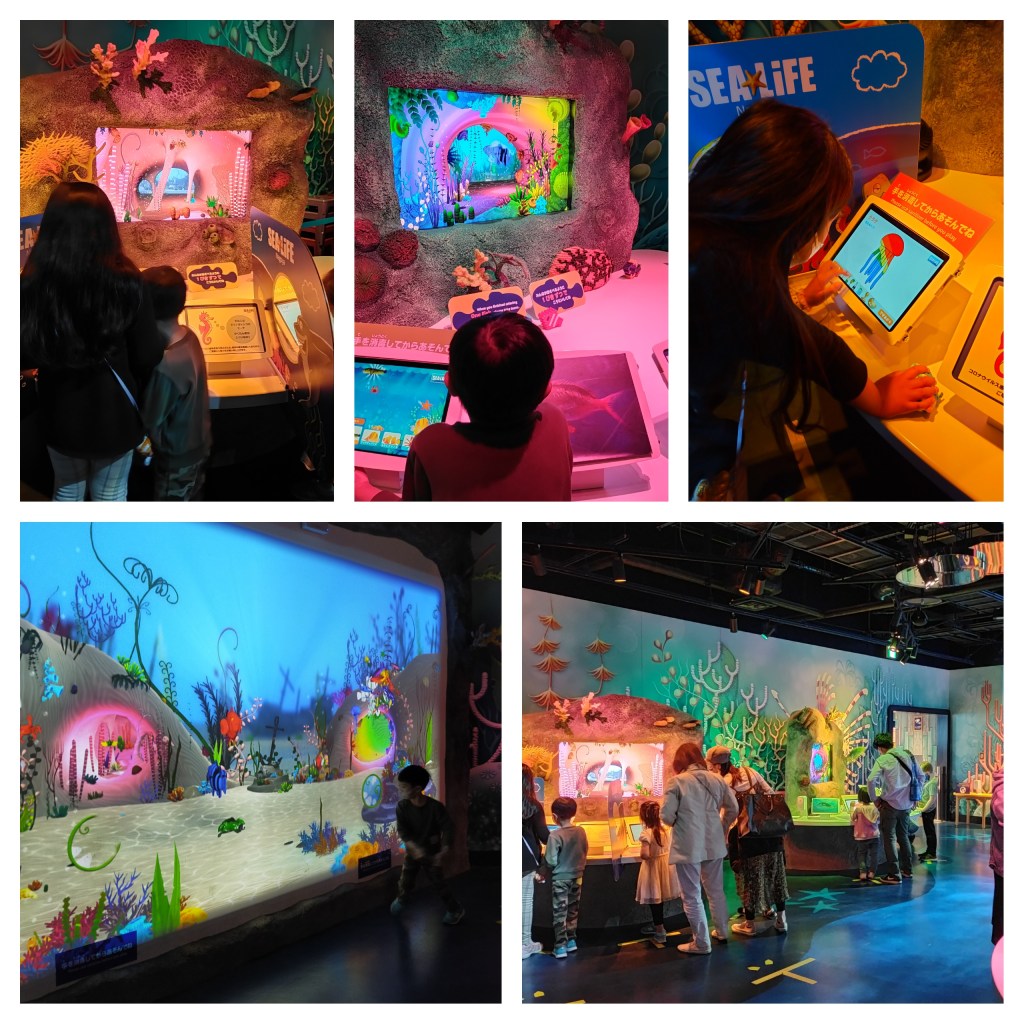
This is the Amazing Creations area. Amazing Creations gives you the opportunity to draw your favorite sea creatures and bring them to life in their digital ocean! They say you can even feed your creations. We actually tried to find out how but our fishes were not fed properly. hehe 🙂
And that was our quick visit to the Sea Life aquarium in Nagoya. Fun! Fun! Fun!
 Where Did We Go