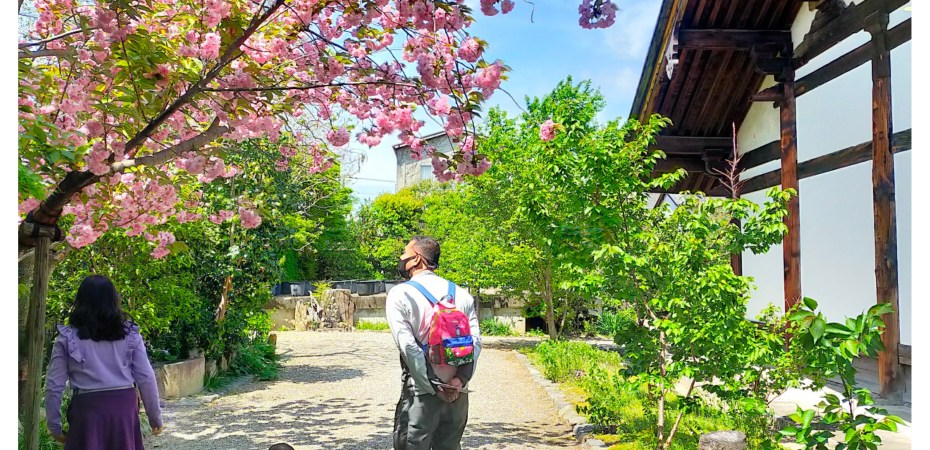
Our 188th entry in this blog is our trip to Gango-ji Temple in Nara, Japan. This is everyone’s (I’m not sure about Papa Dave if he already visited this place before) first time to visit Nara and to visit a lot of temples for today. This will be the first temple for the day.

Gangoji Temple, located among the narrow streets of the Naramachi district of Nara, is a UNESCO World Heritage Site and can lay claim to being one of the most ancient temples in Japan.
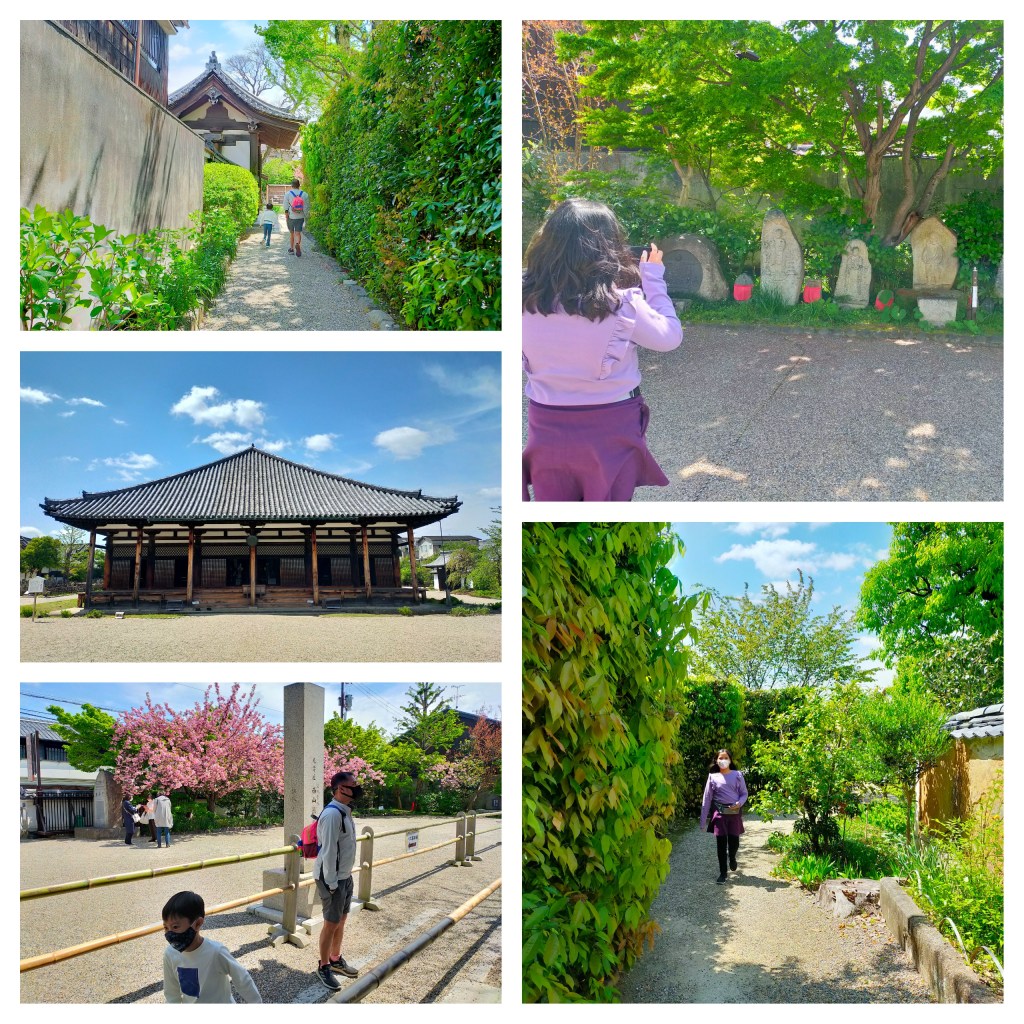
Although not as famous as the “Big Three” must-see temples of Nara: Kofukuji, Todaiji and Horyuji, Gangoji Temple is definitely worth your time, especially if you are exploring the many quirky museums and craft shops of Naramachi. Gangoji has not so far caught the attention of Japan travel guide writers and is thus free of the crowds visiting Nara’s other historic temples.
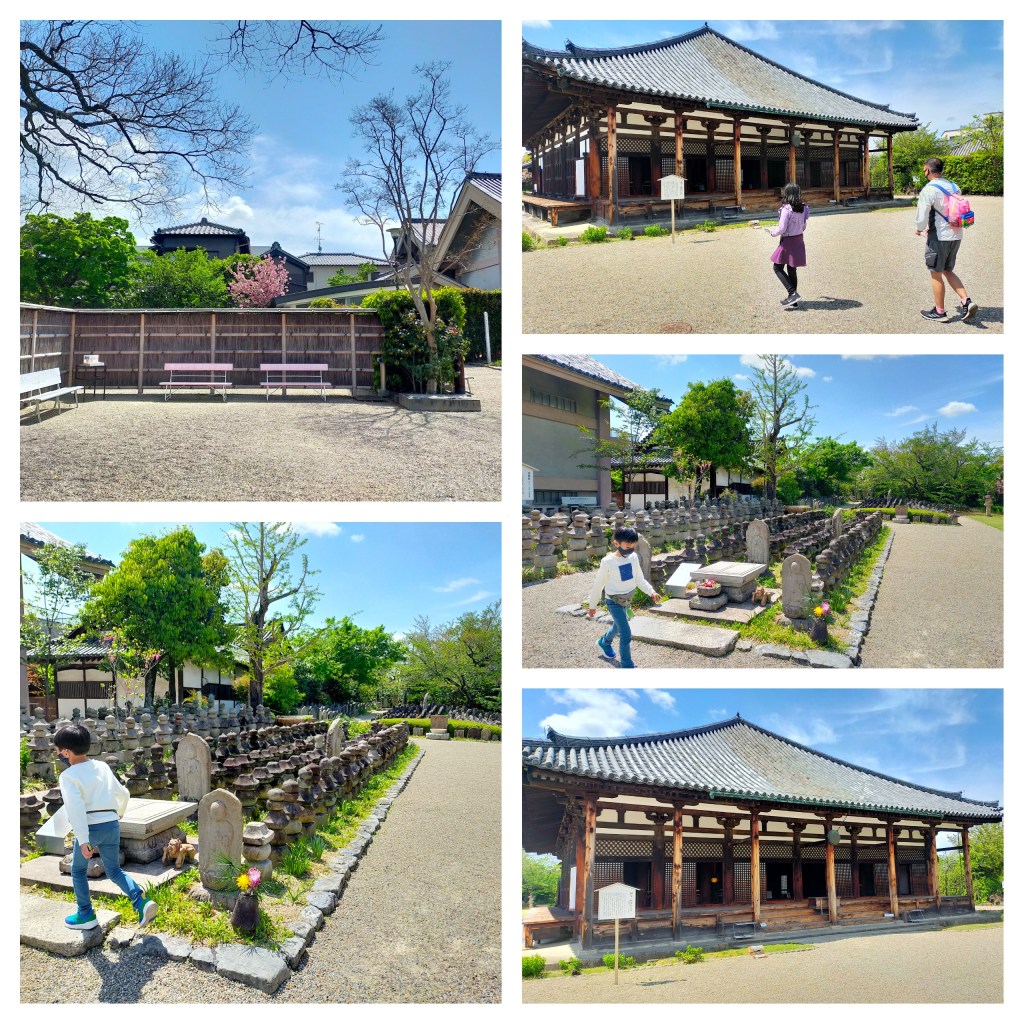
We did not even plan to visit this temple, but we just happen to see it first near the area where we had our lunch. 🙂

Gangoji was one of the seven great temples of the Heian Period in Nara: Daianji, Gangoji, Horyuji, Kofukuji, Saidaiji, Todaiji and Yakushiji. Gangoji Temple was originally founded in 588 during the Asuka Period, when Buddhism was in its infancy in Japan. At this time the ruling Soga clan were busy importing not just a new religion but also models for new political institutions and new cultural ideas and practices from Korea and China.
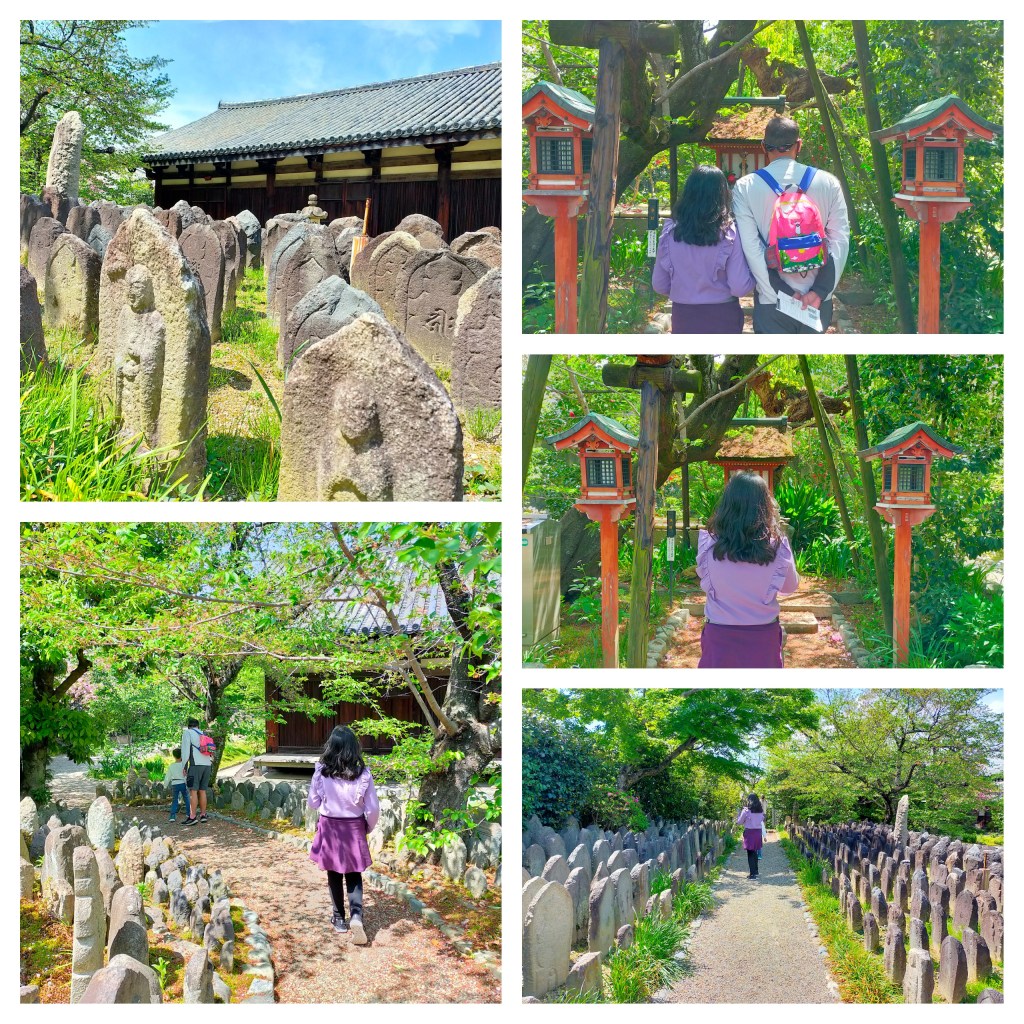
Gangoji is noted for its Gokuraku-do (Hall of Pure Land/Mandala Hall), a designated National Treasure and the Zen Shitsu (Contemplation Hall), also a National Treasure. Both buildings have been damaged, restored, damaged and restored again in a cycle over the passing centuries. Some of the roof tiles on both buildings date are the 6th century originals. Both halls are said to be the architectural remains of dormitories built for the monks in the 8th century.
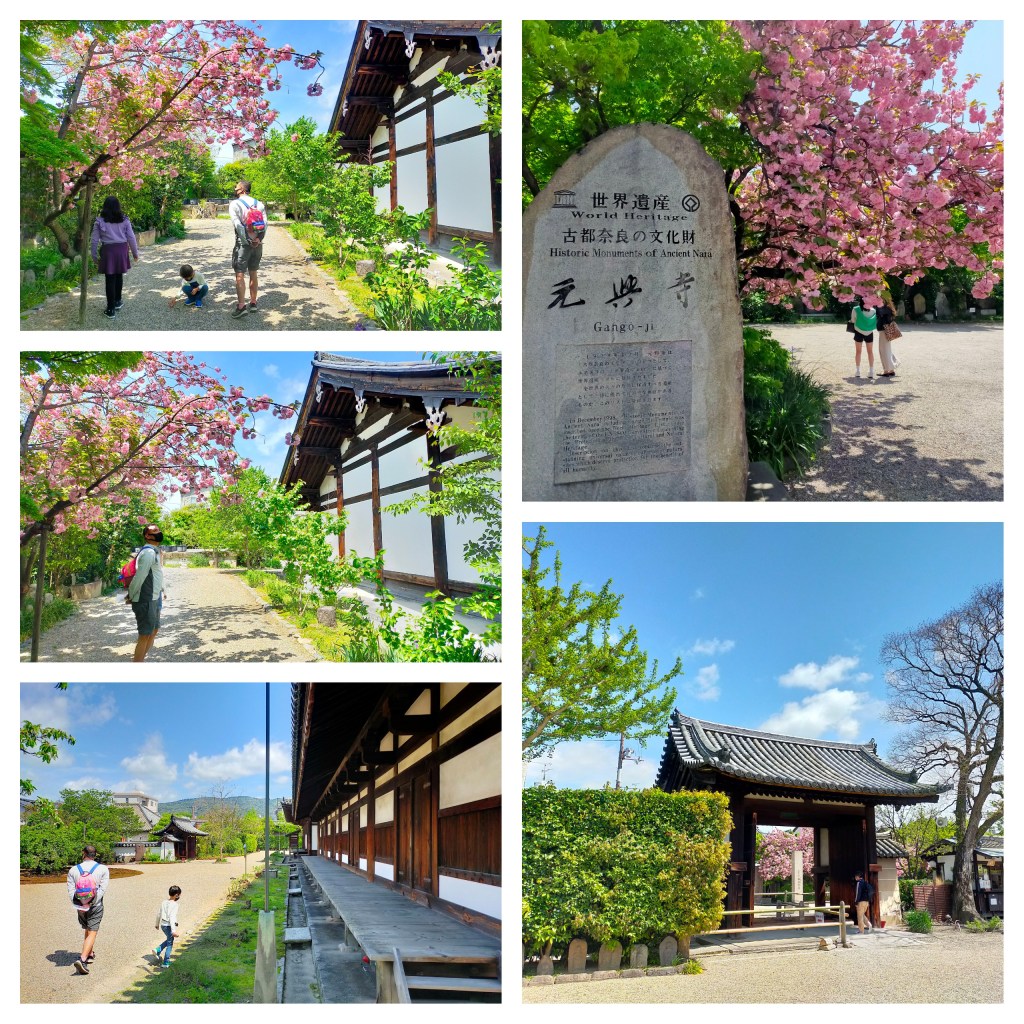
And that was our quick visit to Gango-ji Temple. I hope Ate Rei and Sai were not so noisy running and walking around the sacred place. 🙂
 Where Did We Go