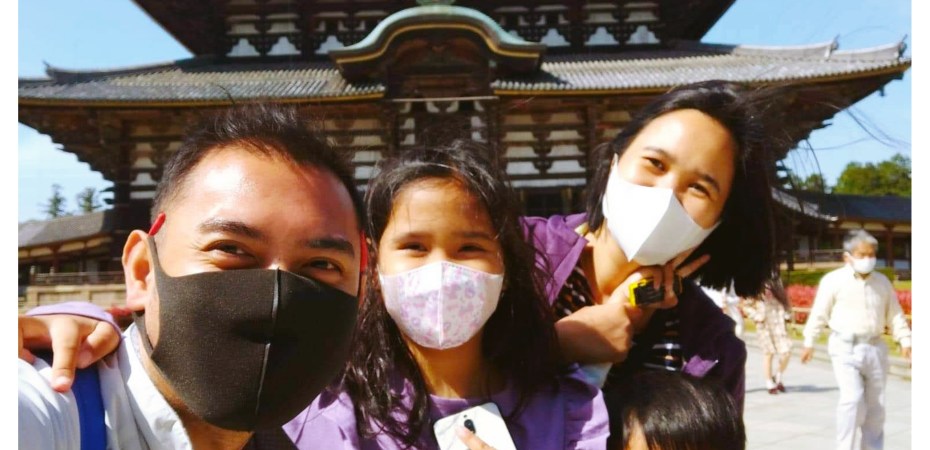
Our 194th entry in this blog is our first time trip to Nara, Japan. We plan to visit as much temples as we can, wherever our little feet goes. 🙂 We arrived around lunch time so we wanted to find a place where we can eat first before starting our walking tour. We are so lucky to pass by this resto that doesn’t even look like one: The Cafe Maru. Lo and behold, they have the best food I have ever tried in this trip! Or am I just super hungry? 🙂
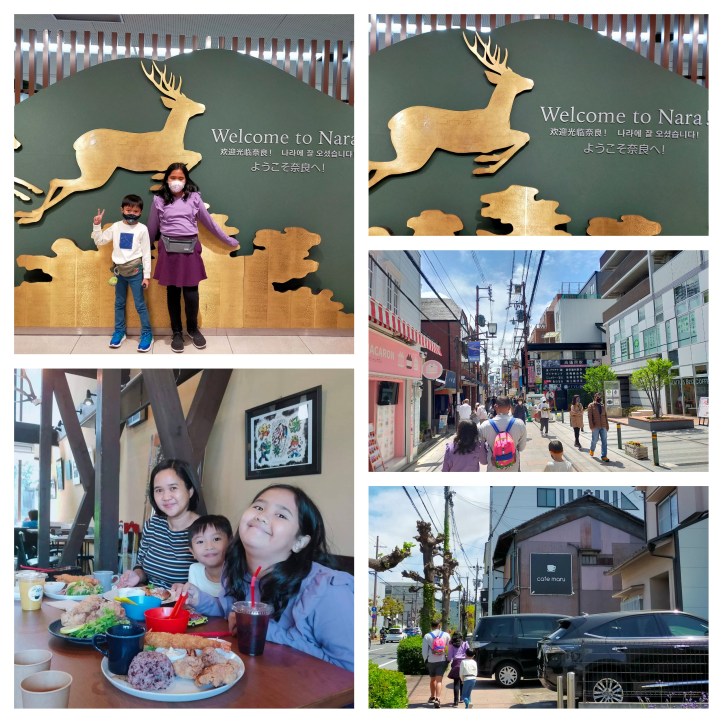
Nara is the capital of Japan’s Nara Prefecture, in south-central Honshu. The city has significant temples and artwork dating to the 8th century, when it was Japan’s capital. Deer roam in Nara Park and they enjoy walking with the tourists.
The first temple we visited was the Gango-ji Temple.

Gangō-ji is an ancient Buddhist temple, that was once one of the powerful Seven Great Temples, in Nara. An often overlooked temple, Gangoji has many secrets waiting to be revealed. Deceptively simple from the outside, there is fantastic mandala art and mischievous ogre statues within the temple and its grounds. The temple is registered as a UNESCO World Heritage site.
Our next stop is the Kofukuji Temple

Kofukuji temple was the family temple of the powerful Fujiwara family and is considered one of the finest museums of sacred Japanese sculpture from the seventh to the thirteenth century. It is situated a short walk from the center of Nara, in Nara Park, and is one of the city’s most beautiful and historic temples and a UNESCO World Heritage Site as well.
Next, we walked to areas of the Nara National Museum

Nara National Museum is focused on preserving the religious heritage of Japanese Buddhism. If you are looking to get an insight into how Buddhism became established in Nara , the museum offers presentations and guides of the major events that shaped the religion. The building itself is an architectural marvel as well.
Next stop, is non other than, The Todaiji Temple.

Todaiji, or the “Great Eastern Temple”, is one of Japan’s most famous and historically significant temples and a landmark of Nara. Until recently, Todaiji’s main hall, the Daibutsuden (Big Buddha Hall), held the record as the world’s largest wooden building, despite the fact that the present reconstruction of 1692 is only two thirds of the original temple hall’s size. This is the main temple that we wanted to visit. But the sun is still up, so we gotta explore more!
Next, we saw some place that is not in our plans. It is because, the hills are alive in here. hehe. Remembering the Sound of Music movie, or probably the Windows XP wallpaper 🙂 Our next stop is: Mount Wakakusa, or Wakakusayama.
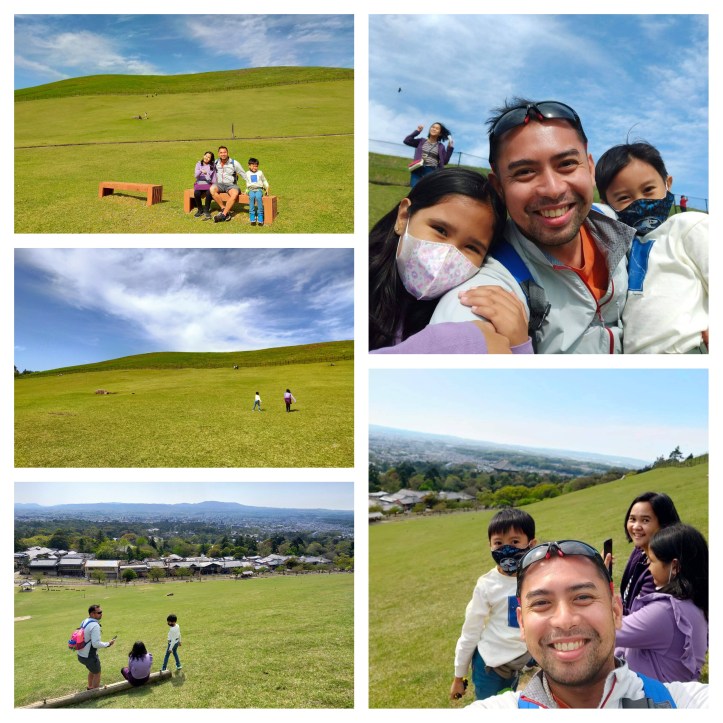
Mount Wakakusa, also known as Mount Mikasa, is a 342-metre-high hill located to the east of Nara Park in the city of Nara, Japan. The mountain’s name literally means “young grass”. The mountain is closed from December 12th to March 17th and cannot be accessed (winter season).
Our last stop is the Kasuga Taisha Shrine

Kasuga-taisha Shrine is famous for Japan’s largest number of lanterns, with 2,000 stone lanterns and 1,000 hanging lanterns within the shrine premises. It is also surrounded by luscious green forest which is very relaxing to walk by.

And that was our one day trip to Nara. We thank God for the bright and sunny day 🙂 We ended our trip with a yummy dinner with waffles. Until next time Nara!
 Where Did We Go