
Our 274th entry in this blog is Rei and Sai’s first visit to Hiroshima Peace Memorial Museum, a museum located in Hiroshima Peace Memorial Park, in central Hiroshima, Japan, dedicated to documenting the atomic bombing of Hiroshima in World War II.
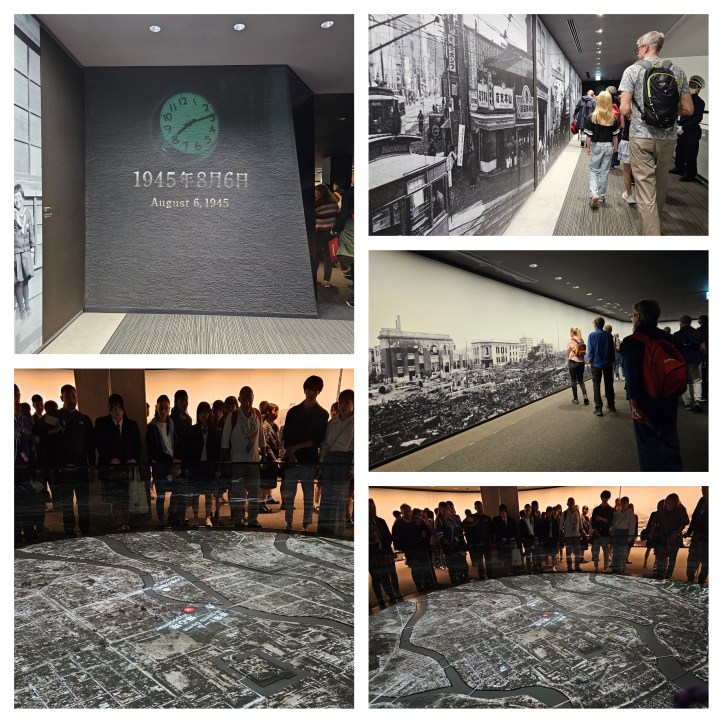
The museum was established in August 1955 with the Hiroshima Peace Memorial Hall (now the International Conference Center Hiroshima). It is the most popular of Hiroshima’s destinations for school field-trips from all over Japan and for international visitors.

According to the introduction in the Hiroshima Peace Memorial Museum’s English guide:
The Peace Memorial Museum collects and displays belongings left by the victims, photos, and other materials that convey the horror of that event, supplemented by exhibits that describe Hiroshima before and after the bombings and others that present the current status of the nuclear age. Each of the items displayed embodies the grief, anger, or pain of real people. Having now recovered from the A-bomb calamity, Hiroshima’s deepest wish is the elimination of all nuclear weapons and the realization of a genuinely peaceful international community.
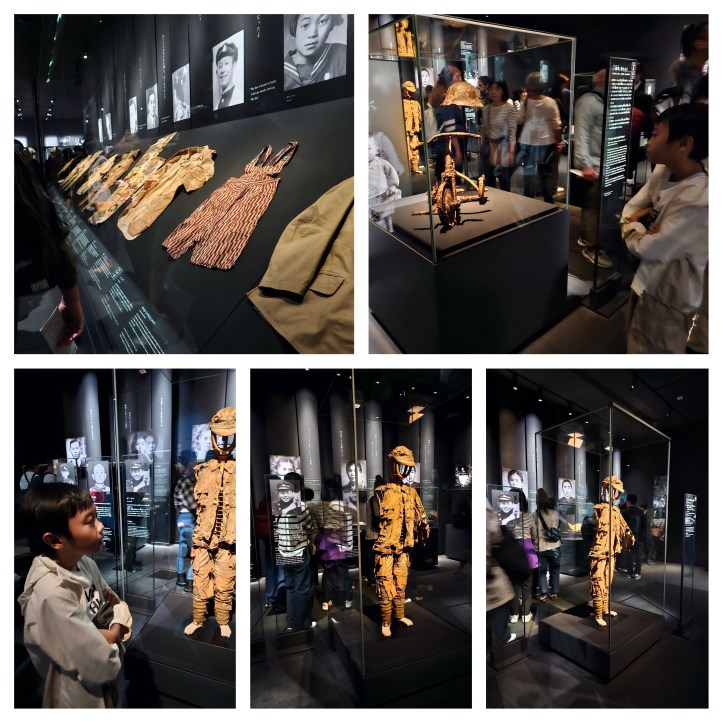
Our little Sai is quite sad looking at all the kids’ clothes that are now radioactive. We are all touched by the exhibits. For ate Rei and Sai, this is the creepiest museum they have ever been, the saddest, but very much informative (a lot of English information is available).
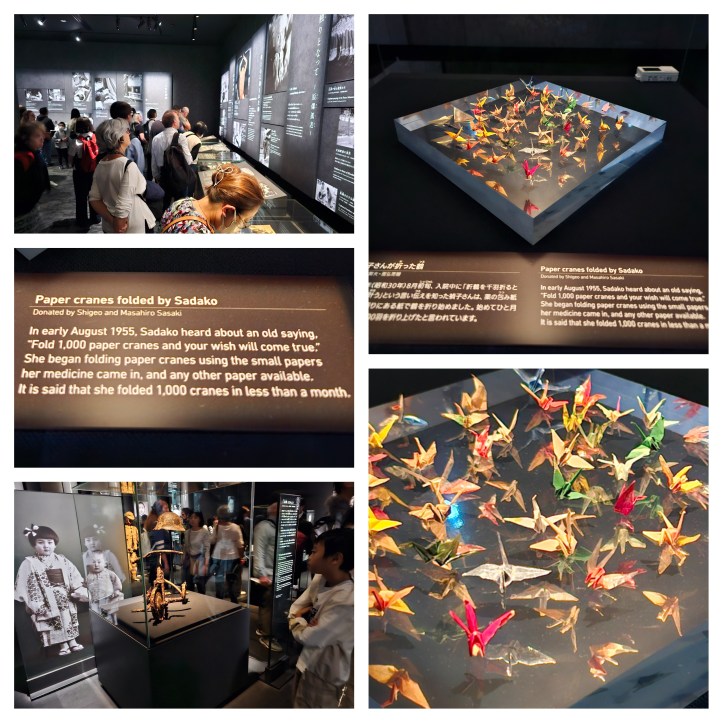
These are actual paper cranes folded by Sadako. There was an old saying that if you fold 1,000 paper cranes, your wish will be granted. She began folding paper cranes using the small papers from her medicines, candy wrappers, and any other paper available. She folded 1,000 cranes in less than a month. 🙂 I hope her wish really did come true.

We transferred to the other wing of the building as a continuation of the tour inside the museum. The West Wing, which was part of the old museum, concentrated on the damage of the bomb. Sections included Material Witness, which showed clothing, watches, hair, and other personal effects worn by victims of the bomb; Damage by the Heat Rays, a section that looked at what happened to wood, stone, metal, glass, and flesh from the heat; Damage by the Blast, focusing on the destruction caused by the after shocks of the blast, and Damage by the Radiation which went into detail about the health effects suffered by humans.
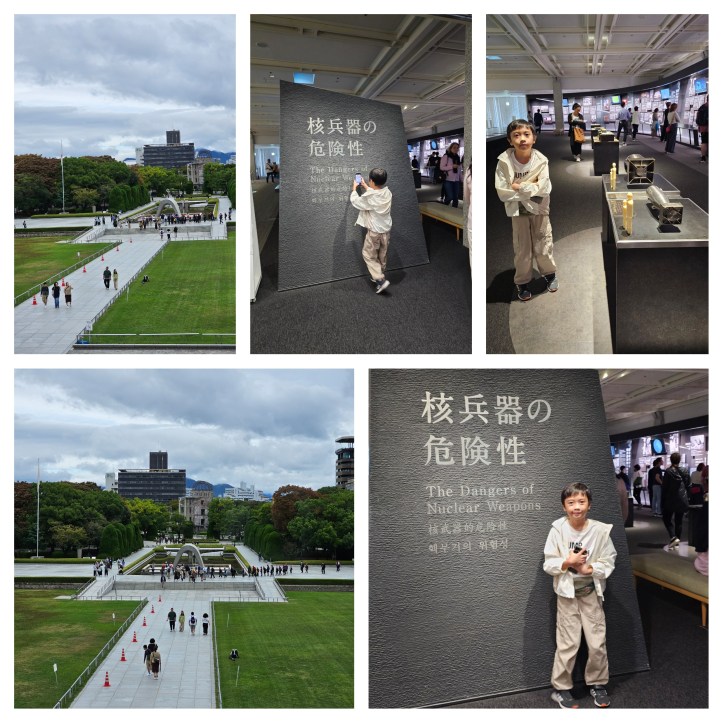
The East Wing, the newest addition, explained the history of Hiroshima City before the bomb, development and decision to drop the bomb, the lives of Hiroshima citizens during World War II and after the bombing, and ended with information about the nuclear age and efforts for international peace.

The museum began major renovations in 2014. The East Wing reopened in April 2017, featuring more interactive displays and replacing the model of the city with a new version that uses projection mapping to demonstrate the effects of the bomb blast.

When the East Wing reopened, the Main Hall was closed for seismic retrofitting until 25 April 2019.
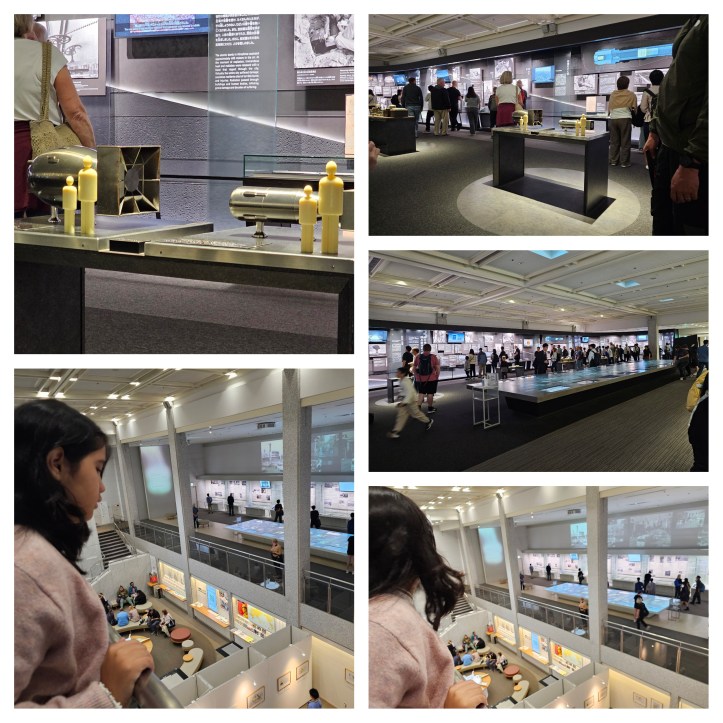
The exhibits were also renovated during this time to focus more on victim’s belongings, and are now divided into four sections: an introductory exhibit in the East Wing, “Reality of the Atomic Bombing” and a gallery in the Main Building, “Dangers of Nuclear Weapons” in the East Wing, and “Hiroshima History” in the East Wing.
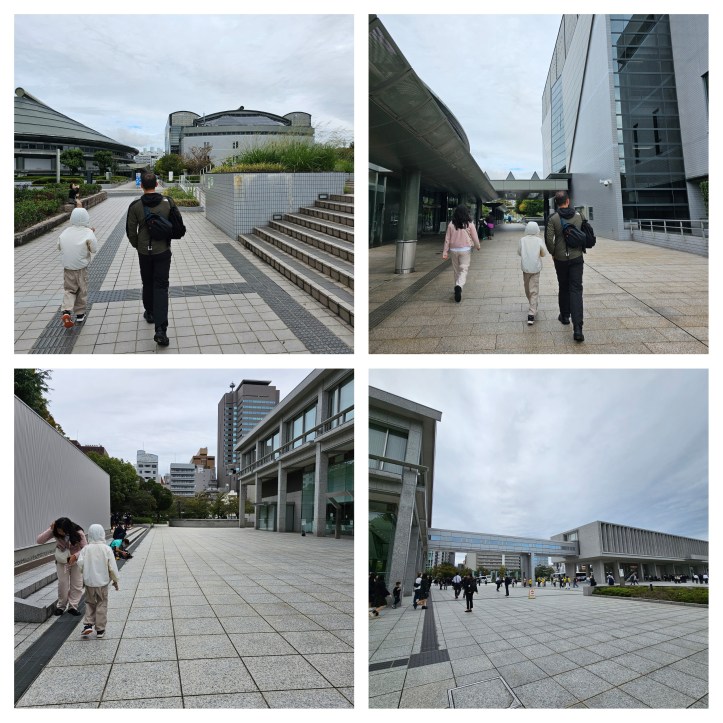
And that is our quick visit to Hiroshima’s Peace Memorial Museum. Looking at all the displays, we are lucky to gain knowledge of this rich culture and its past. And we pray for all the families and victims in this catastrophic historical event.
 Where Did We Go