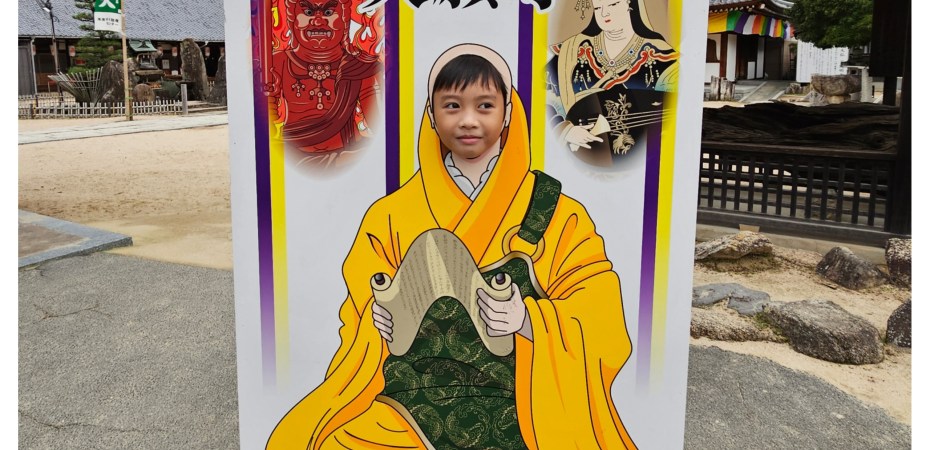
Our 276th entry in this blog is Rei and Sai’s first time trip to Itsukushima Shrine in Miyajima, Hiroshima, Japan.
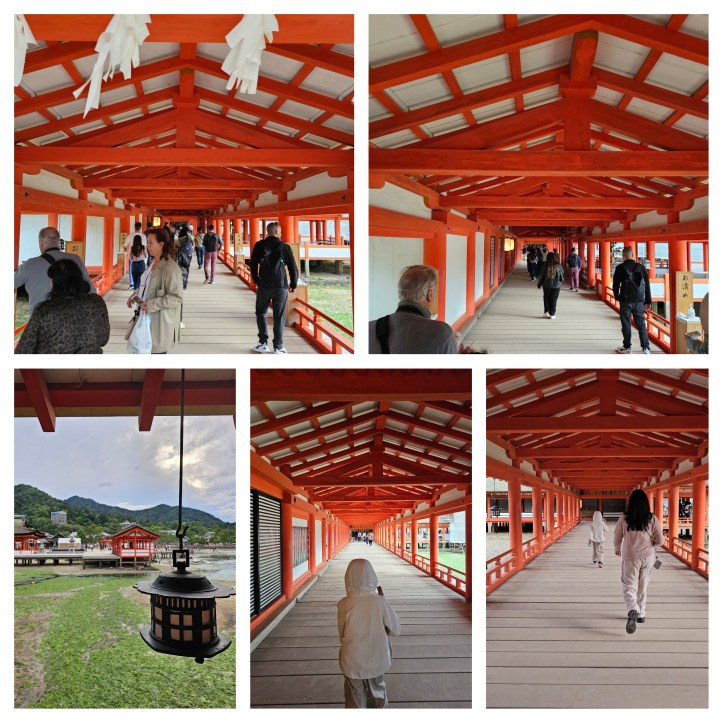
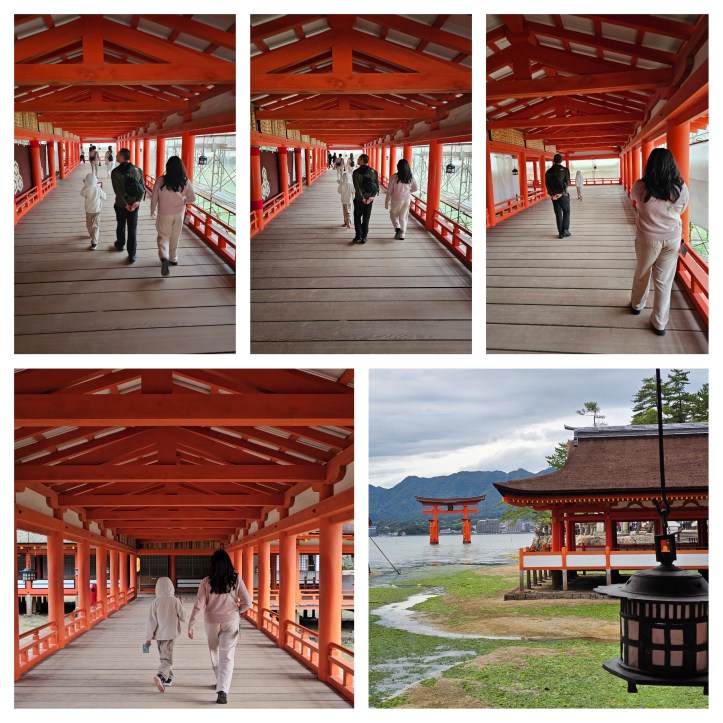
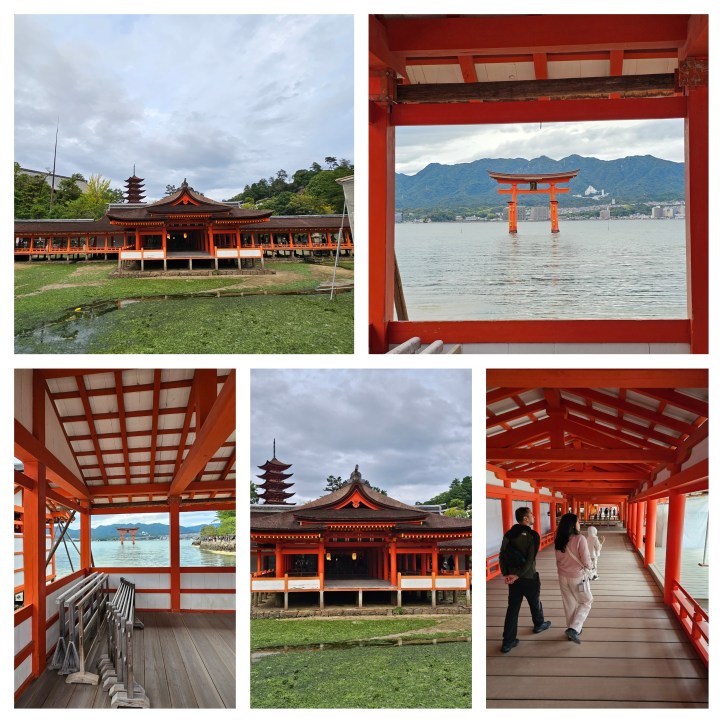
Itsukushima Shrine is a Shinto shrine on the island of Itsukushima (popularly known as Miyajima), best known for its “floating” torii. It is in the city of Hatsukaichi, in Hiroshima Prefecture in Japan, accessible from the mainland by ferry at Miyajimaguchi Station. The shrine complex is listed as a UNESCO World Heritage Site, and the Japanese government has designated several buildings and possessions as National Treasures.
The Itsukushima shrine is one of Japan’s most popular tourist attractions. It is most famous for its dramatic gate, or torii on the outskirts of the shrine, the sacred peaks of Mount Misen, extensive forests, and its ocean view.
It was not uncommon during the 12th century for the nobility to build shrines or take on other architectural projects in order to “reflect their power and splendor.” The Taira clan are known specifically for their involvement in maritime trade with the Song dynasty (960–1279) and for attempting to monopolize overseas trade along the Inland Sea. Kiyomori was at the height of his power when he established the Taira dominion over the island. He “ordered construction of the main hall of Itsukushima shrine as a display of reverence for the tutelary god of navigation and to serve as a base for maritime activities…”. Miyajima soon became the Taira family shrine. – wiki
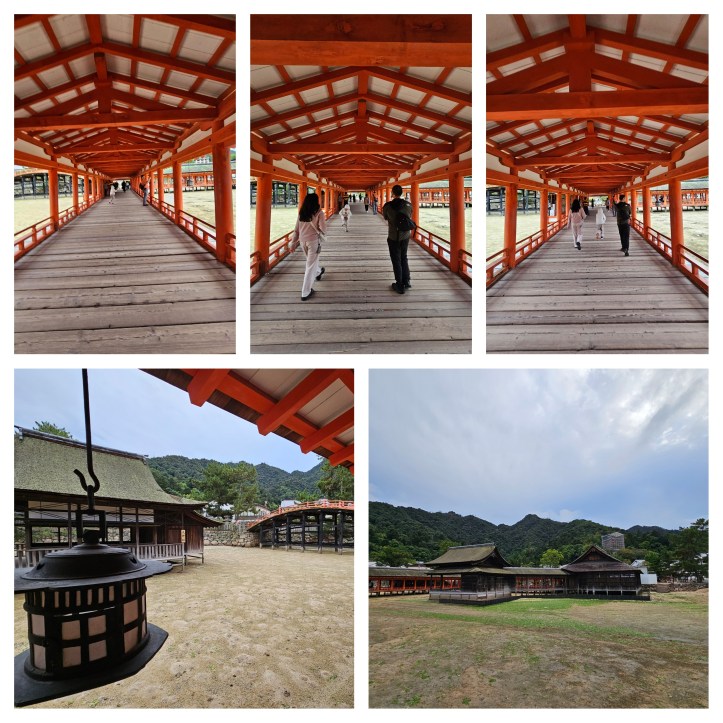
Originally Itsukushima was a pure Shinto shrine “where no births or deaths were allowed to cause pollution”. Because the island itself has been considered sacred, commoners were not allowed to set foot on it throughout much of its history to maintain its purity. Retaining the purity of the shrine is so important that since 1878, no deaths or births have been permitted near it. To this day, pregnant women are supposed to retreat to the mainland as the day of delivery approaches, as are the terminally ill or the very elderly whose passing has become imminent. Burials on the island are forbidden. To allow pilgrims to approach, the shrine was built like a pier over the water, so that it appeared to float, separate from the land. The red entrance gate, or torii, was built over the water for much the same reason. Commoners had to steer their boats through the torii before approaching the shrine.
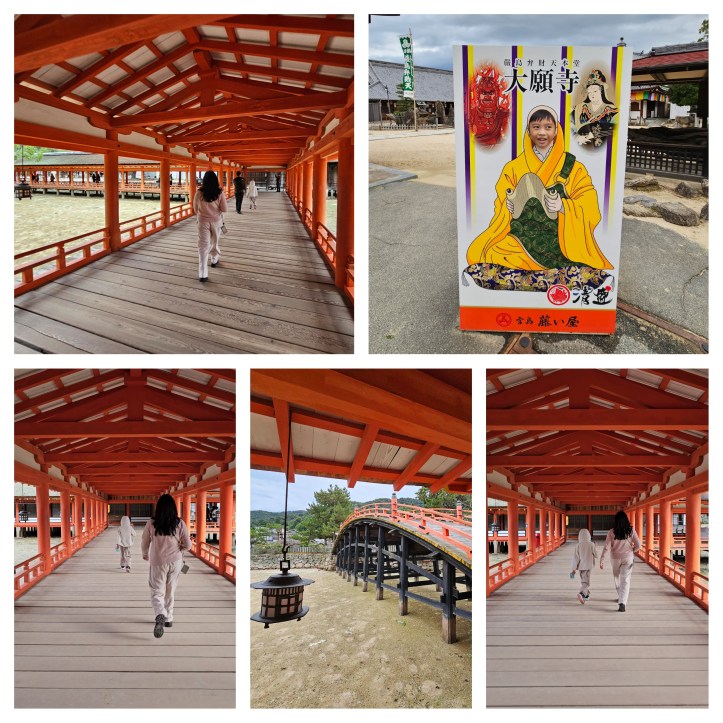
There are a lot of interesting information in their pamphlets. We are so glad we finally visited this place. We are in awe at the details of this shrine, preserving it even though the structures base are submerged in water specially during high tide. And that is our quick visit of the shrine. 🙂
 Where Did We Go