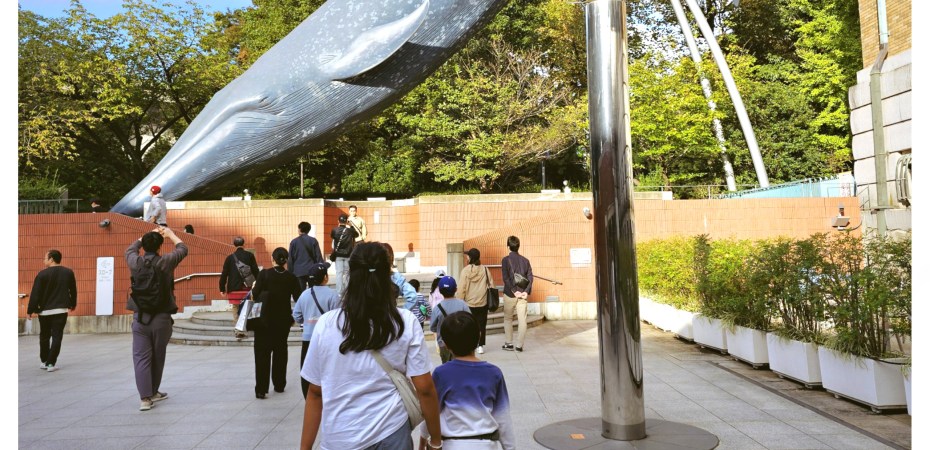
Our 286th entry in this blog is our 2nd time visit to Tokyo’s National Museum. This has always been in our list to go back ever since we visited this place 6 years ago. And now we are planning to visit more floors than we did before. hehe.

We got off at Ueno Station and walked to the museum. There are other museums here, I think there’s one for the arts. Maybe we can also visit that someday.

Of course we go first to the Dinosaur one, as Sai always wants to see this area, not remembering the time when he was here at 4 years old. hehe. Now he’s 10 and more serious in knowing more about these big fellas of the past. 🙂

Based on the epic themes “History of the Universe”, “History of Life”, and “History of Humankind”, there is a total of 13.8-billion years of history that are being displayed here through specimens, documents, and videos. It is the centerpiece that links the exhibition halls of the Global Gallery.
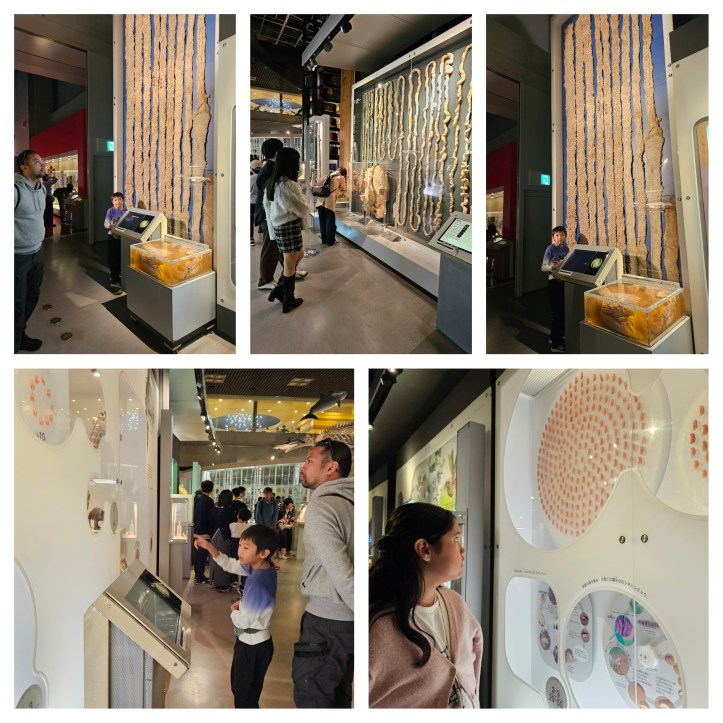
If I can remember it right, this is the area for symbiosis and parasitism. That long thing over there (in the upper photo) is an intestine of, maybe a whale?
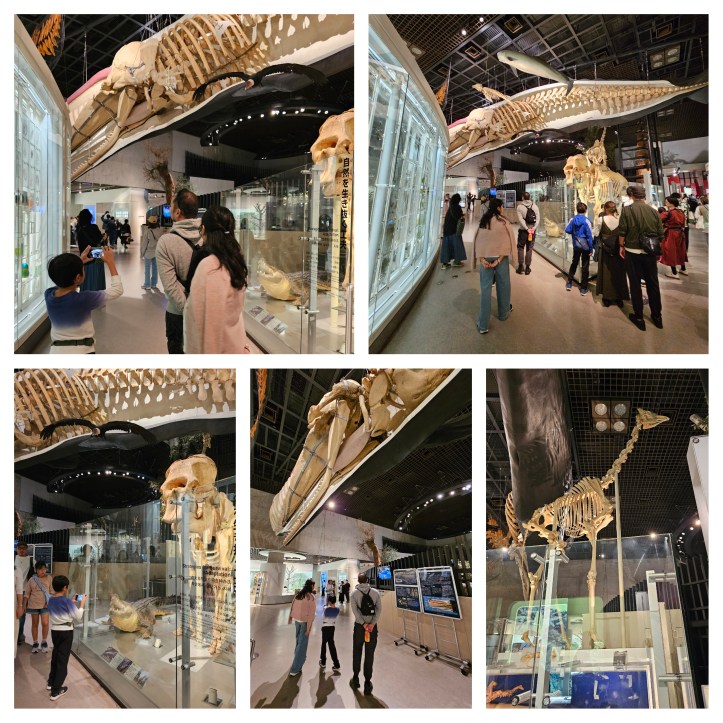
You can learn a lot from this floor alone: Diversity of Marine Life and Terrestrial Life, as well as the origins of Biodiversity.
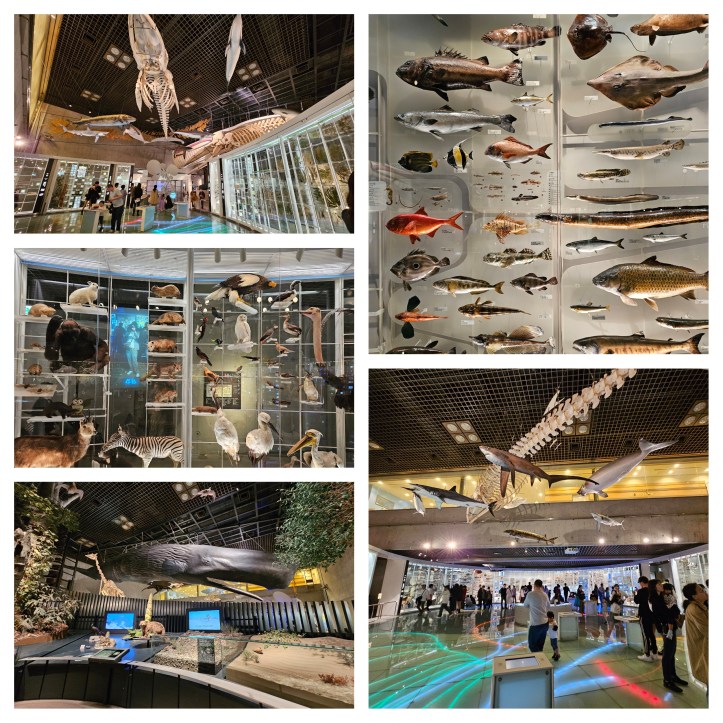
You can see a lot of marine species in here, far more than what you see in the aquariums. Because these museums has lots of displays about the extinct ones. The ones we are lucky to see even if they no longer exist in our lifetime. char. hehe.
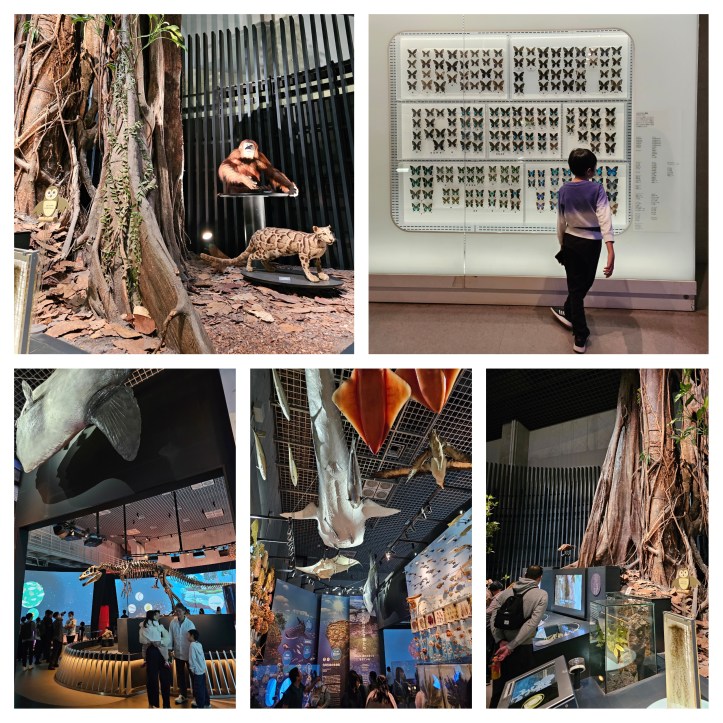
From bacteria to humans, the number of species that now exist on earth is at least 1.6 million. These species show great diversity, which has resulted from repeated branching of new evolutionary lines from ancestral forms inhabiting ancient oceans. All forms of life are ultimately related to one another as shown by the Tree of Life.
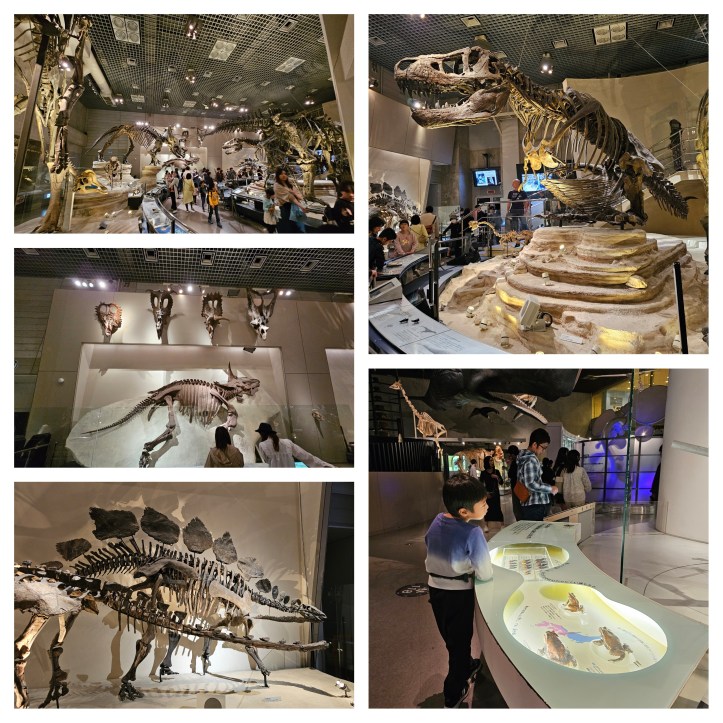
Today, reptiles and birds are quite different animals. Studying dinosaurs however bridges the gap between the two. There are countless mysteries including the origin of dinosaurs, their increase in size, diversification, and their extinction.

Since their beginnings some four billion years ago, life forms have become increasingly diverse due to the ongoing process of environmental adaptation.
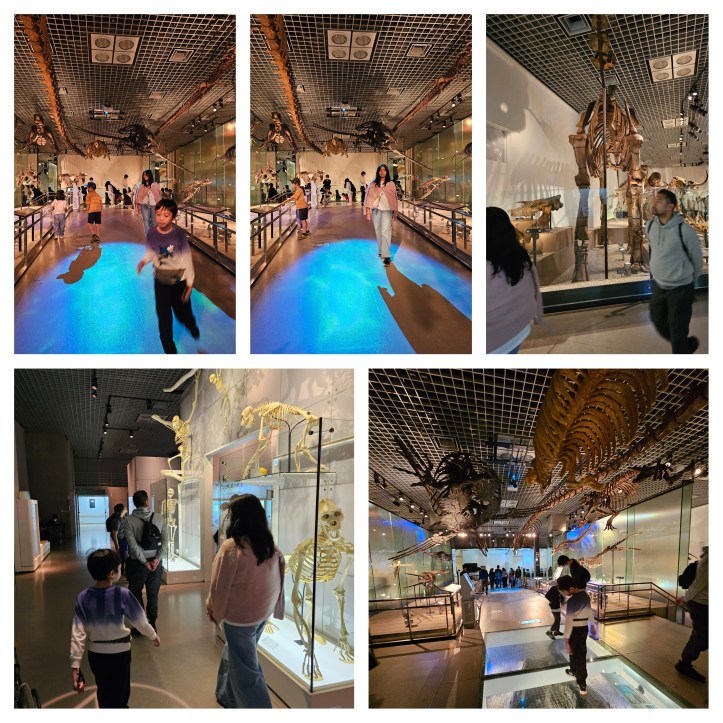
Human beings, part of the mammal group which flourished following the demise of the dinosaurs, have acquired highly developed adaptive capabilities. This adaptive capacity has enabled humans to extend their reach to all corners of the Earth.

There is also a display for the nature of the Japanese Islands as well as the history of the Japanese Islands.

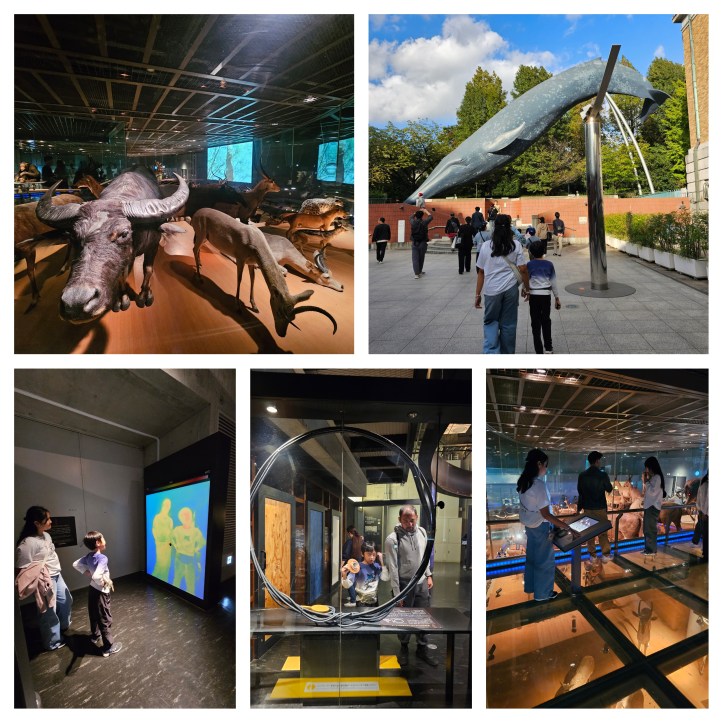
One of the interactive displays are in the Investigation Technology for the Earth. At the Global Environment Detector, images and data showing fluctuations here on Earth are introduced in semi-real-time. There are many interactive displays making it possible to instinctively experience the physics related to light and magnetism, which are the foundation of observation technology.

We also had some fresh air at the top of the building while looking at their display on herbal plants. There’s a good view overlooking Ueno area.
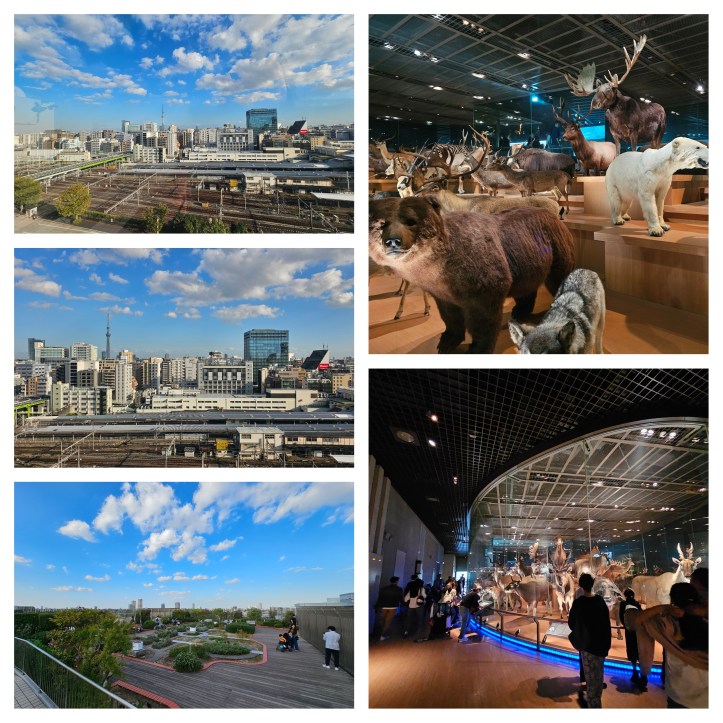
My favorite part is the animals of the earth. I think these are real animals that are already preserved and stuffed. It is so humbling to look at them with their actual sizes and their glorious forms.
I still don’t think we have explored everything. We did not go much to the Japan Gallery. That’s a good reason for us to come back next time to completely explore everything. Until then! 🙂
 Where Did We Go