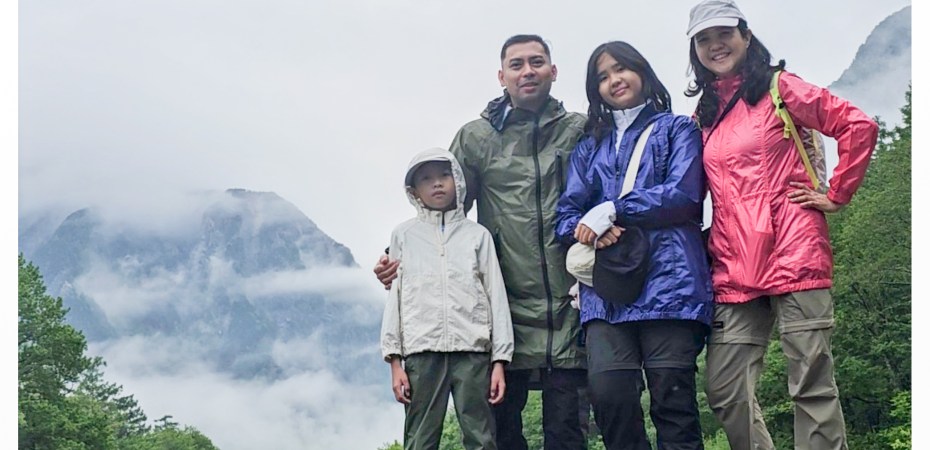
Our 298th entry in this blog is our first time visit to Kamikochi, a remote mountainous highland valley within the Hida Mountains range, in the western region of Nagano Prefecture, Japan.
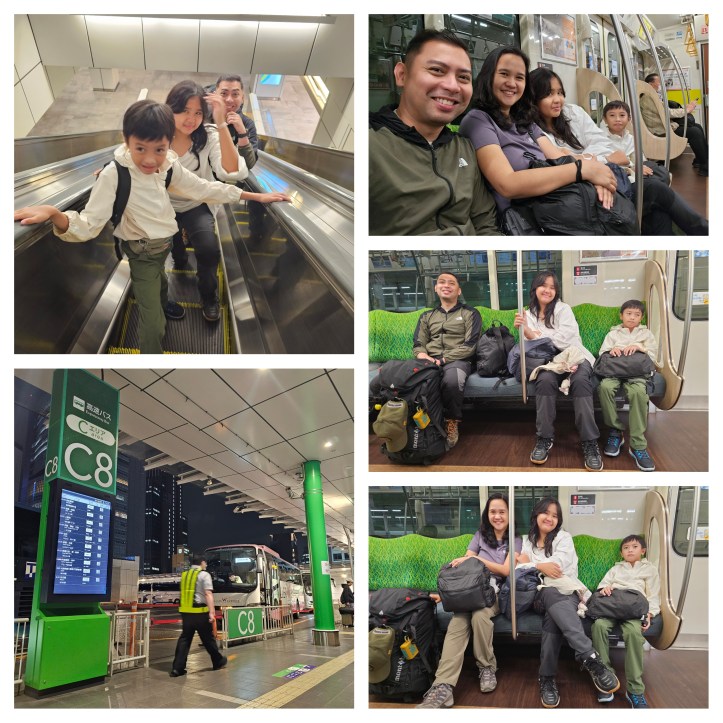
Our trip started with an overnight bus, a 7-hour ride, direct to Kamikochi. Everyone is excited for this bus trip, as we know that going to the mountains of Japan is rewarding, even after the back aches of riding the overnight bus hehe. 🙂
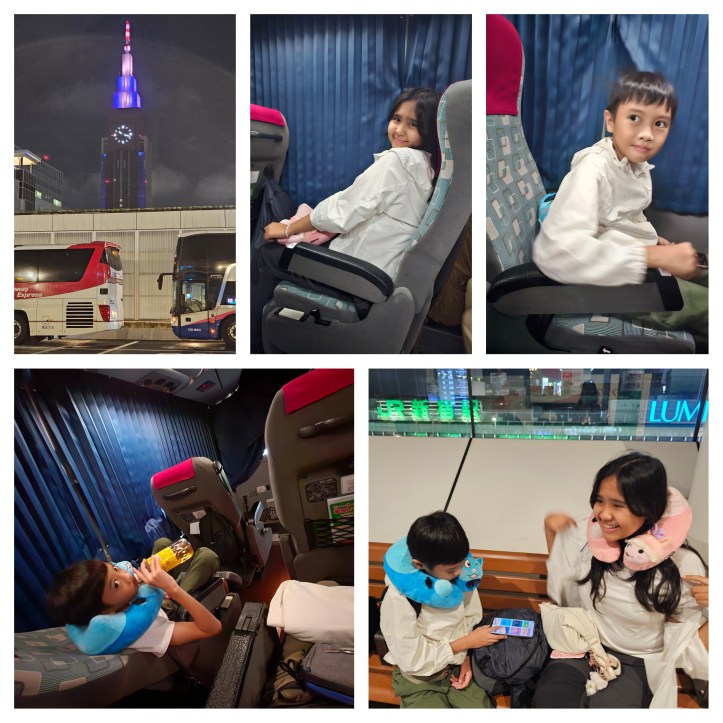
Our bus ride is from around 10pm to 5am. But it actually stopped somewhere for like 2-3 hours before it started letting people get off the bus. I noticed it because I really cannot sleep in bus rides haha! 🙂
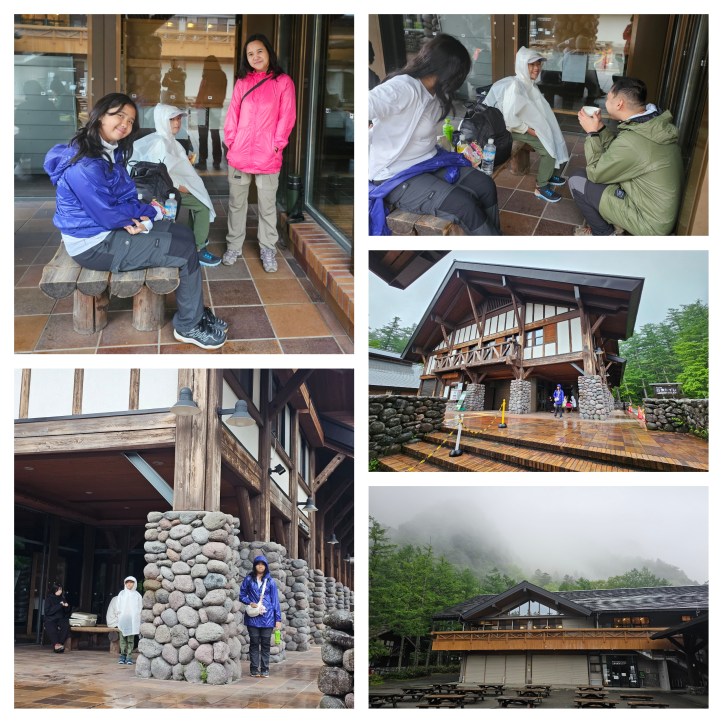
We finally arrived! And it was raining. Well, we already it’s gonna be a rainy stay. Complete, all-out rain for the 2 days that we are here. Darn! But we still pushed through because we have never tried hiking in the rain. This will be a completely new experience for us. 🙂

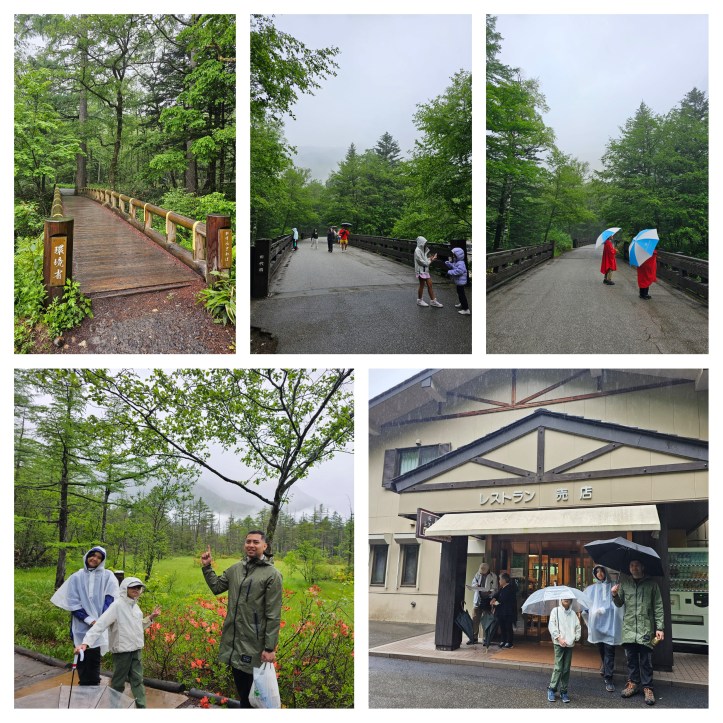
From the bus station, we started our hike to the Kappa Bashi bridge. Kappa Bridge (Kappabashi) is a suspension bridge over the Azusa River in the center of Kamikochi, not far from the bus terminal. Several hotels, restaurants, and souvenir shops can be found around the bridge.
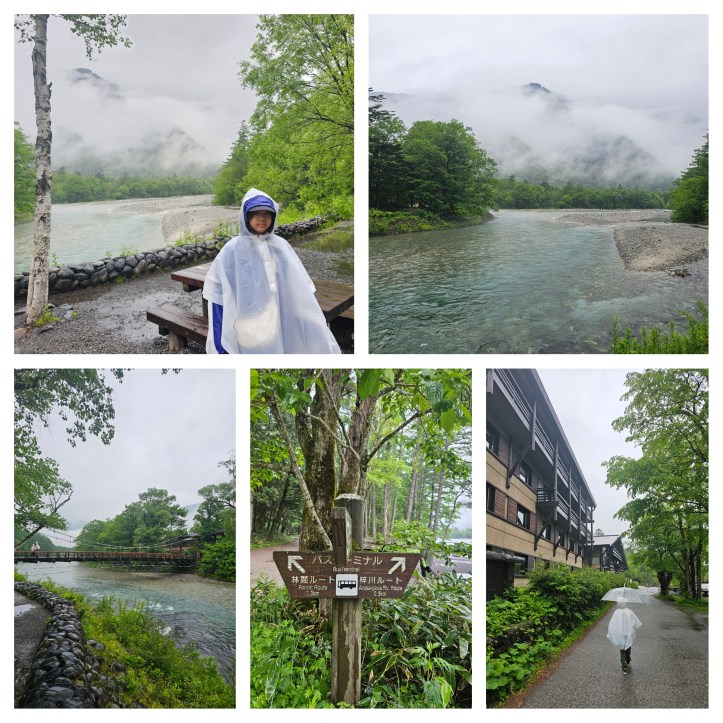
The structure of the bridge is wooden and it has become a distinctive symbol of Kamikochi. It inspired the 1927 novel, “Kappa,” by Ryunosuke Akutagawa, in which the narrator and protagonist journeys to Kamikochi only to stray into the mysterious land of the kappa, a quirky race of water spirits from Japanese folklore.
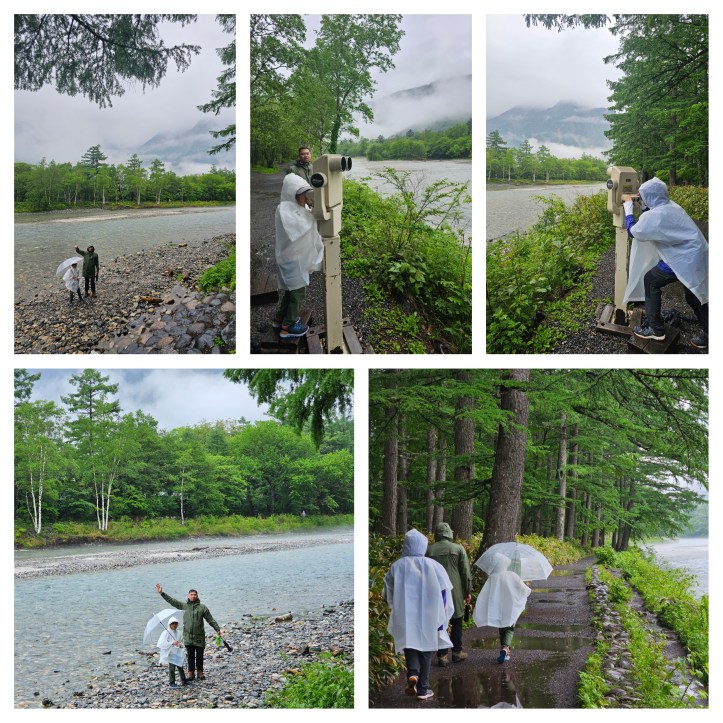
Kamikochi has been preserved in its natural state within Chūbu-Sangaku National Park. It is designated as one of Japan’s National Cultural Assets, on the list of Special Natural Monuments and Special Places of Scenic Beauty.

Kamikochi is sometimes referred to as the “Japanese Yosemite Valley,” although it is considerably smaller than its Californian counterpart.

Kamikochi is a very popular hiking destination, there are an abundance of mountain huts and camping sites that make overnight hiking easy to manage. The most famous hike in the area is Yarigatake which is easily accessible from Kamikochi and often combined with Oku-Hotaka as a multi-day hike.
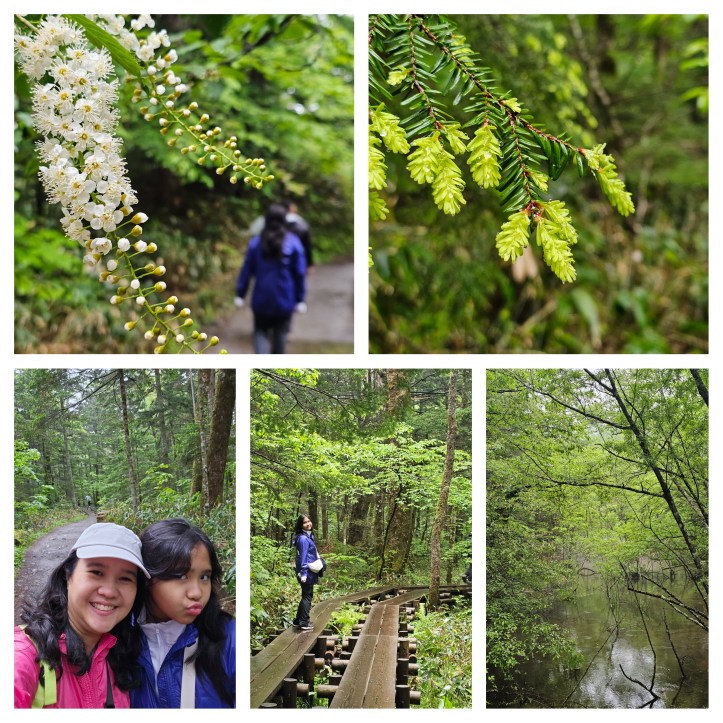
We are now heading to Tashiro Pond. The rain had stopped and although we love wearing our raincoats, it became a bit humid so we took it off. The park is officially open from mid-April to mid-November, with peak crowds during the summer school holidays (end of July through the end of August) and when the autumn leaves are at their peak in October.
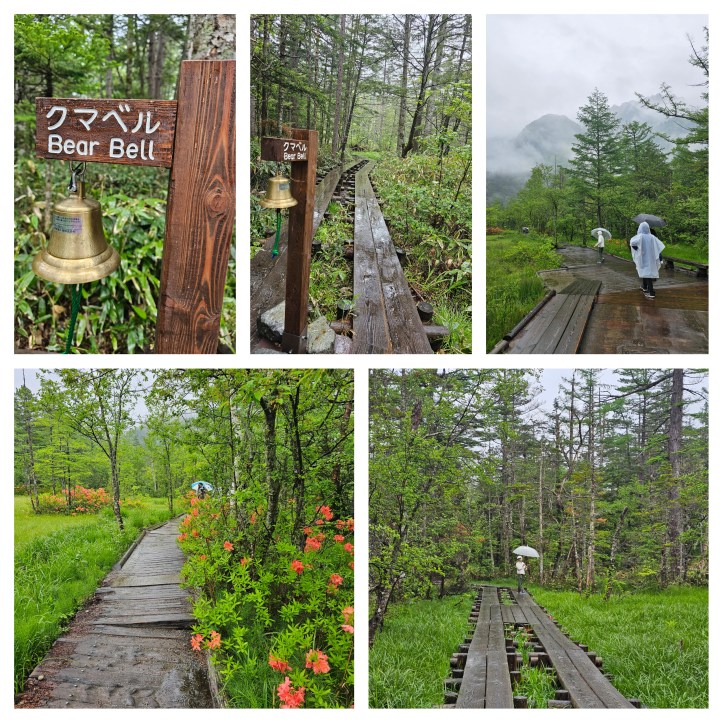
Tashiro Pond, one of Kamikochi’s most scenic spots, is a small pond surrounded by marshland. It is located along the hiking trail that connects the Kappa Bridge with Taisho Pond. It was really magical with the special effects of fogs and clouds. It sometimes look creepy. hehe.
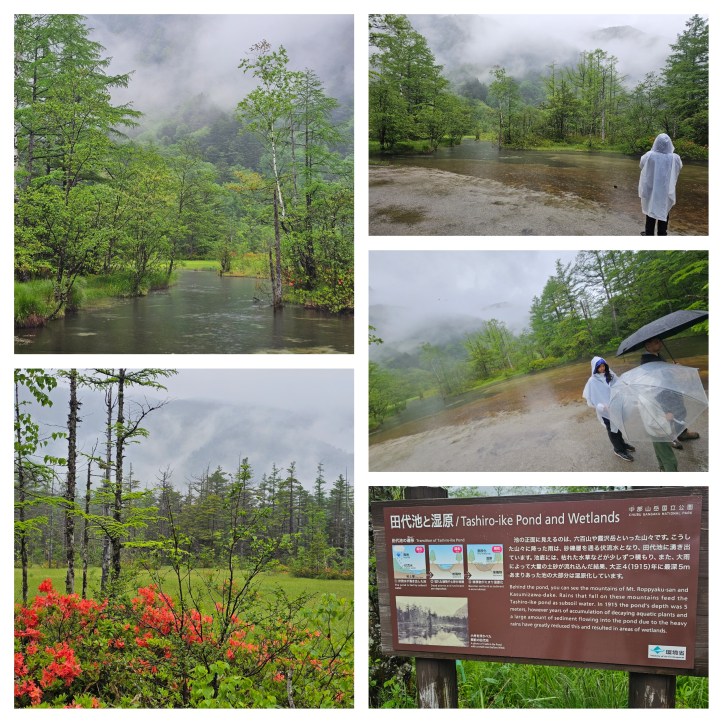
When passing Taisho Pond and following the trail toward Kappa Bridge, after a while, Tashiro Pond suddenly appears before you. Clear water reflects the sky and towering mountains and the edge of the pond in wreathed with seasonal flowers during the warm months. Tashiro Pond never freezes over completely because of the spring water underneath. However, the area of pond has been reduced by erosion from Mt. Kasumizawadake over the years. In some areas, the pond has turned into a marsh through the accumulation of dead leaves and other residue.
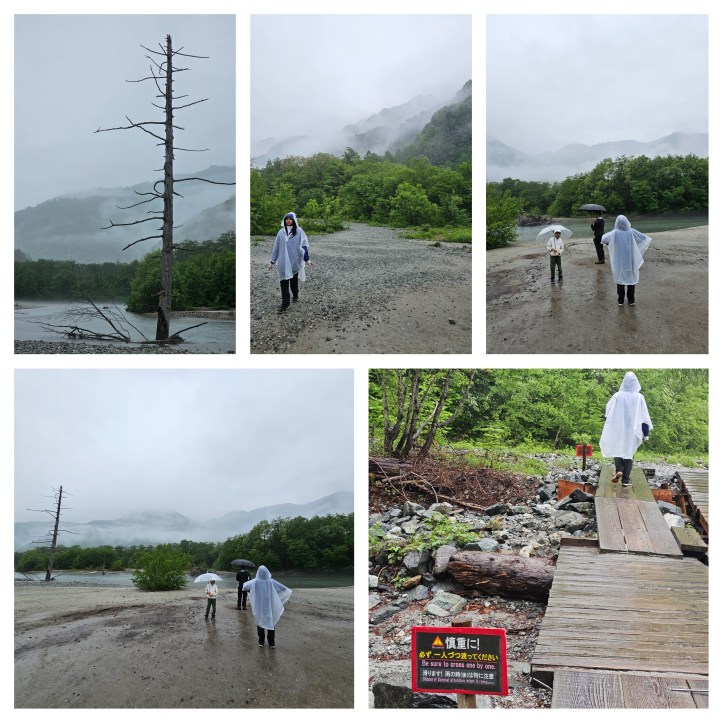
Taisho Pond (Taishoike) was formed in 1915, when an eruption of the nearby volcano Mt. Yakedake dammed the Azusa River. The decayed trees in and around the pond add a special ambiance to the scene, as well as a subtle reminder of the destruction wrought by volcanic activity.
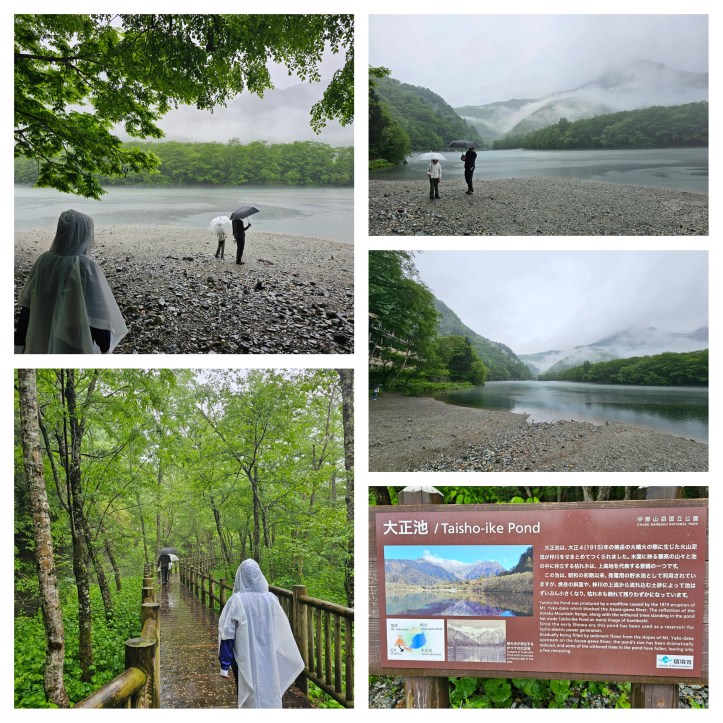
Even today, a few of the submerged trees can be seen in the pond, and a variety of plant life exists in the surrounding marshlands. As the water level of the lake drops due to the flow of debris from the mountainside, the lake is dredged of silt annually and the dam is maintained artificially to generate hydro-power. With the view of the trees standing withered in the pond in the morning haze and Mt. Hotakadake and Mt. Yakedake being reflected on the surface of the pond against the clear sky, Taishō Pond is one of the most popular scenic points in Kamikōchi.
We stopped over for combini foods and drinks near the Taisho Pond. Then immediately went back to Kappabashi taking the other route, the other side of the river.
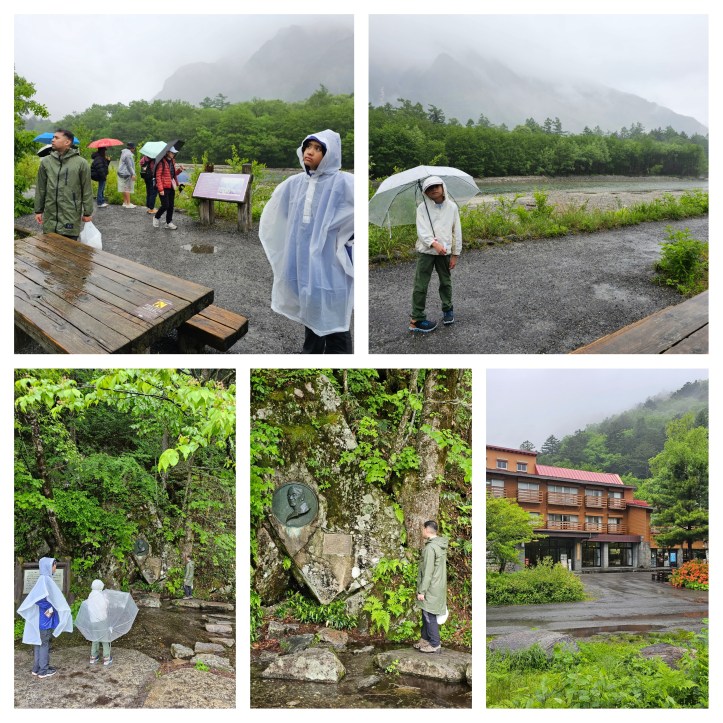
Kamikōchi was logged extensively until the mid-19th Century. The Rev. Walter Weston, a British Anglican missionary (his image coined in the photo above), is credited through his writing with sparking interest in recreational mountaineering in Japan and also with lobbying to preserve the Kamikōchi area. Each year in June, the Weston Festival is celebrated at Kamikochi in recognition of his contribution to the conservation of the Northern Japan Alps.
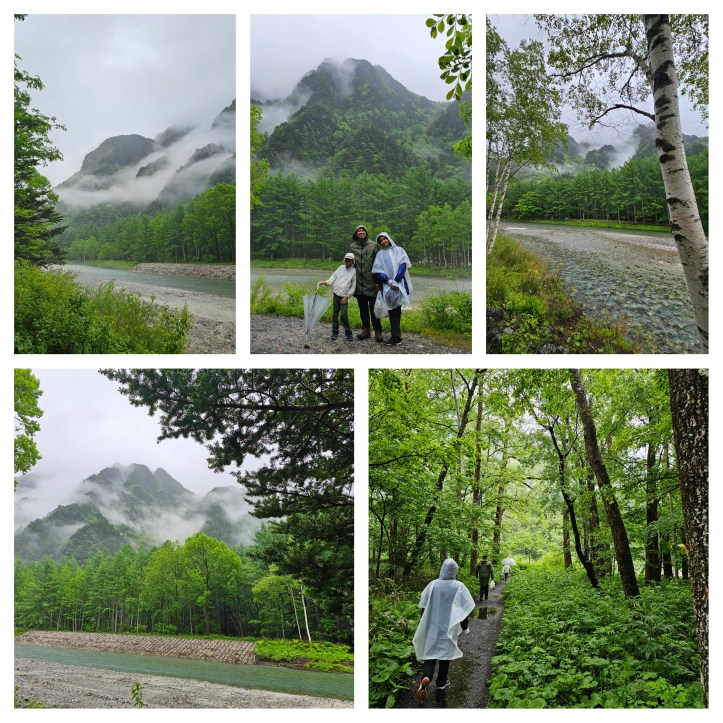
We went back to Kappabashi bridge area to look for lunch meals (although it is still around 10am) as we are already super duper hungry. hehe.
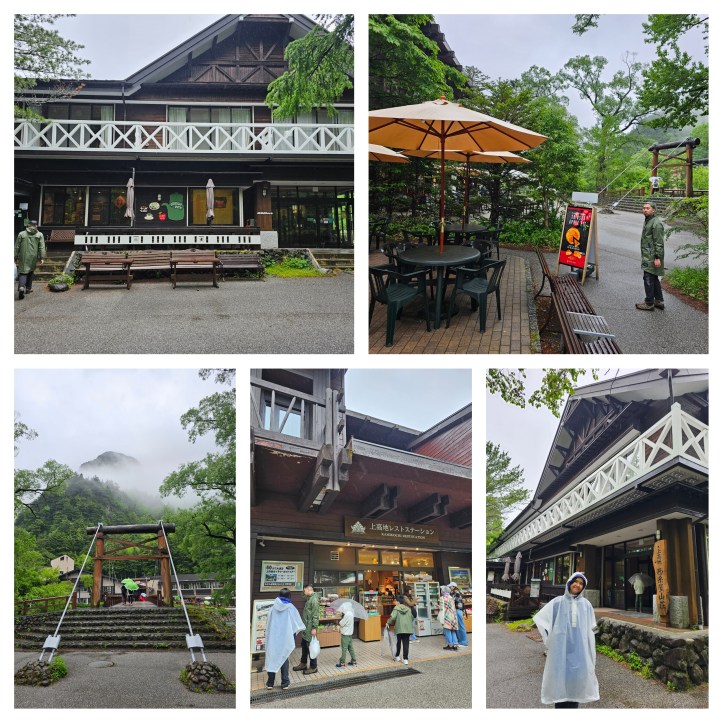
Park facilities include two camping areas, a number of hotels (western-style and traditional Japanese ryokan), a post office, a tourist information center and some souvenir shops, mainly located between the bus and taxi terminal and Kappa-bashi bridge.
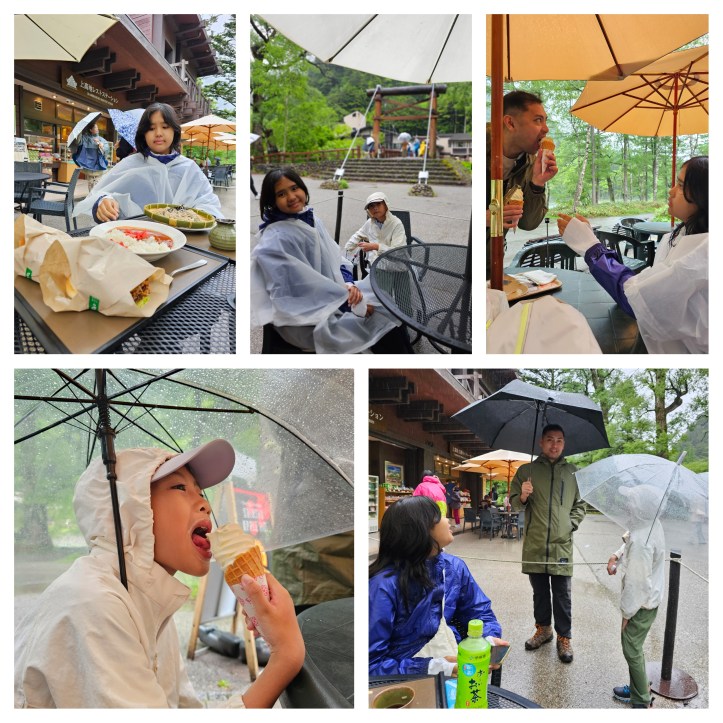
How else to go with the cold weather than having ice cream right after lunch! 🙂
Kappa Bridge is especially popular as a photo spot with a terrific view of the Hotaka Peaks and Mt. Myojindake that can been seen when facing upriver. Looking downriver, one has a good view of Mt. Yakedake, the iconic peak at the entryway to Kamikochi whose smoking crater reminds us that it is a very active volcano. The area around the bridge is home to Kesho Yanagi (a local species of willow) and Japanese larch trees.

We were supposed to hike on the other side of the bridge for the next day. But, due to dangers of landslides caused by the whole day of rain, we were advised not to. And so we went to Matsumoto for the next day.
And that is our quick visit to Kamikochi. This could have been the easiest hike we have if it not for the rain that made it challenging. But, for sure, everyone had a great time! Walking and hiking in the rain is not bad at all. It was one of the most memorable experience for us. Hope to be back soon here in Kamikochi. 🙂
 Where Did We Go