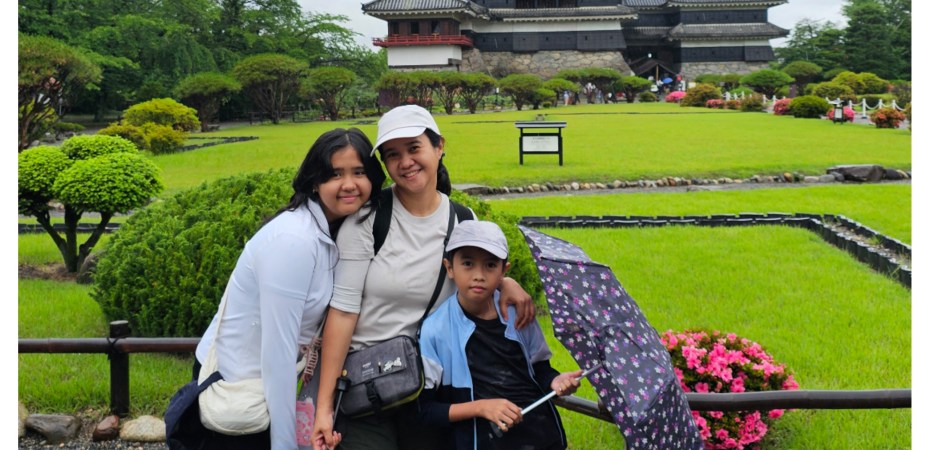
Our 300th entry in this blog is our first time trip to Matsumoto Castle in Nagano, Japan.
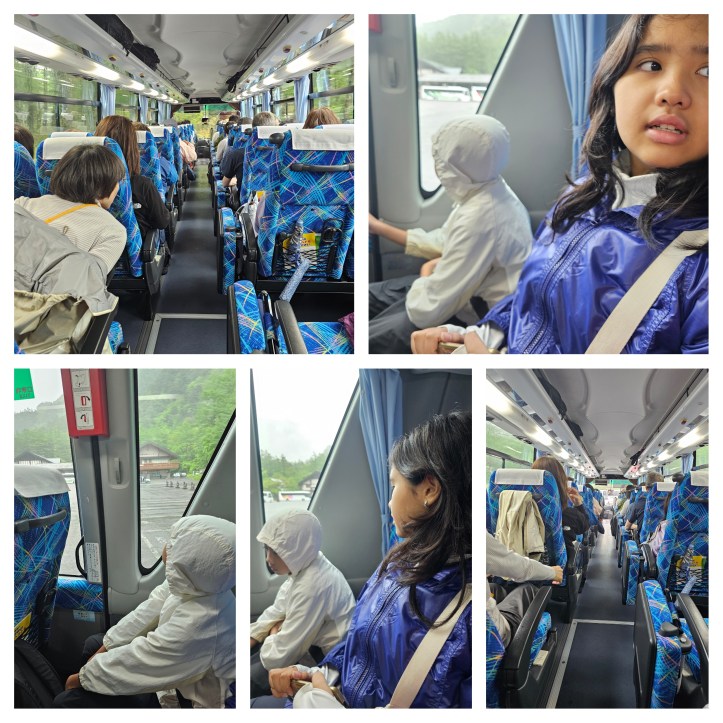
This is actually not included in our plan. Our plan was to visit Kamikochi and do the hike around the area for 2 days. But in the morning of our 2nd day, we were told to evacuate the area for a possible landslide due to heavy rains in the upper parts of the mountain. So, by 8am, everyone from all hotels and campsites in the area were to ride the bus and we decided to go to Matsumoto. Hooray! 🙂
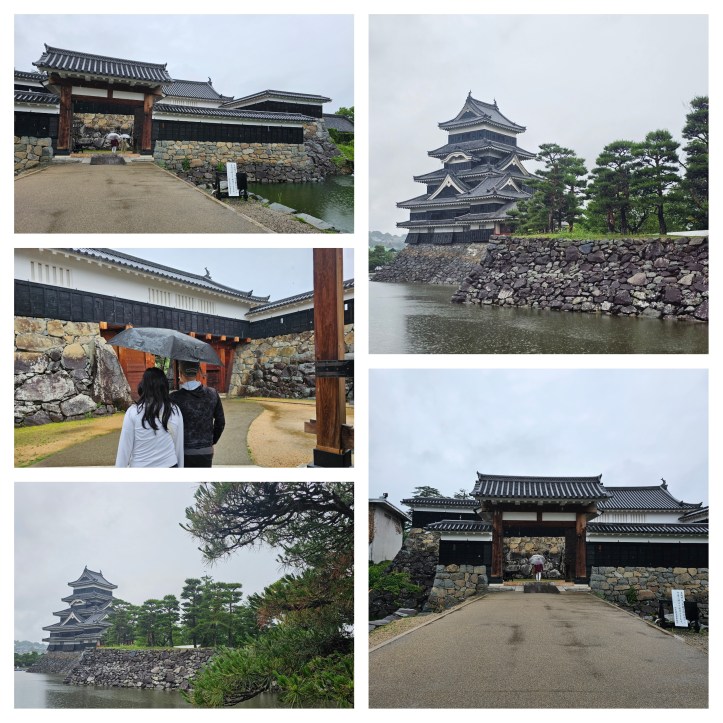
Since we are to go back to Tokyo on this day, we decided to visit the nearest attraction we can find. And that is the Matsumoto Castle. 🙂
Matsumoto Castle (Matsumoto-jō), originally known as Fukashi Castle, is one of Japan’s premier historic castles, along with Himeji and Kumamoto. It was the seat of Matsumoto Domain under the Edo Period Tokugawa shogunate.

The keep, which was completed in the late sixteenth century, maintains its original wooden interiors and external stonework. It is listed as a National Treasure of Japan, and is one of the twelve surviving tenshu in Japan. It is surrounded by four other buildings also designated as National Treasures.

Matsumoto Castle is a flatland castle because it is not built on a hilltop or amid rivers, but on a plain. Its complete defenses would have included an extensive system of inter-connecting walls, moats, and gatehouses.
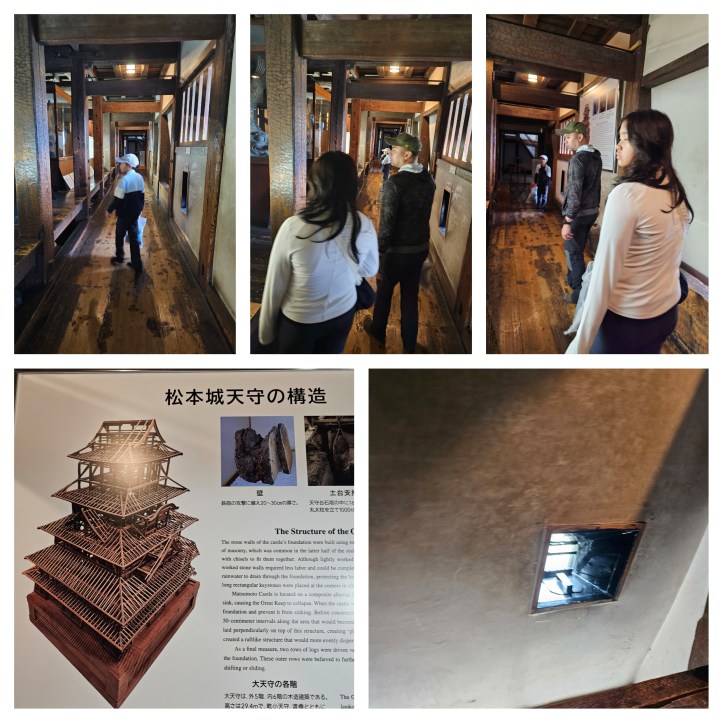
Matsumoto Castle is one of the grandest castles in Japan. Its five-tiered, six-story main tower, built in late 16th century, is the oldest surviving castle tower in the nation. It’s famously photogenic, with a wide moat, vermilion bridges, and original stonework, back-dropped by views of the Northern Alps.
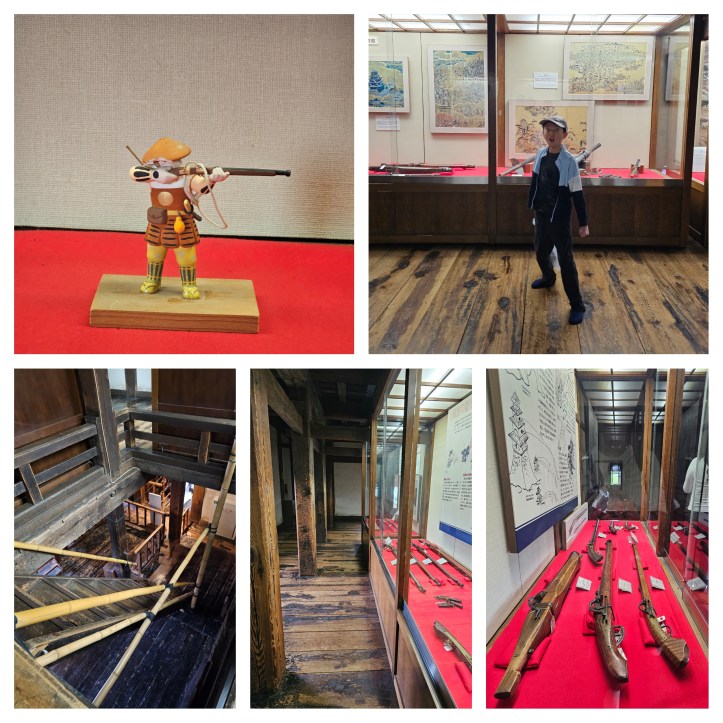
Interesting features of the castle include steep wooden stairs, openings to drop stones onto invaders, openings for archers, as well as an observation deck at the top floor of the main keep with nice views over the surrounding city.
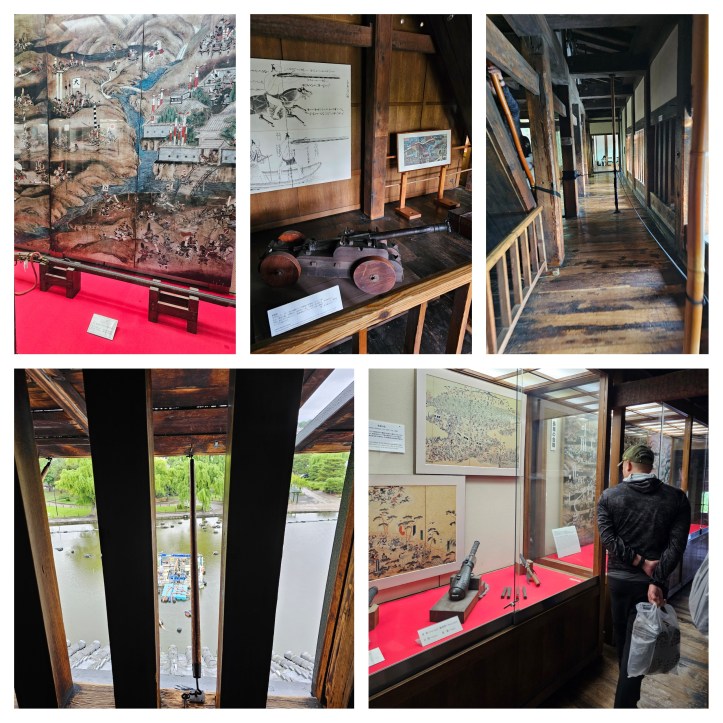
Since the structures were built for war 115 gun and arrow slots were built. And there are 11 doors in the first floor wall, where guns can shoot downward. The castle is built for gun warfare.
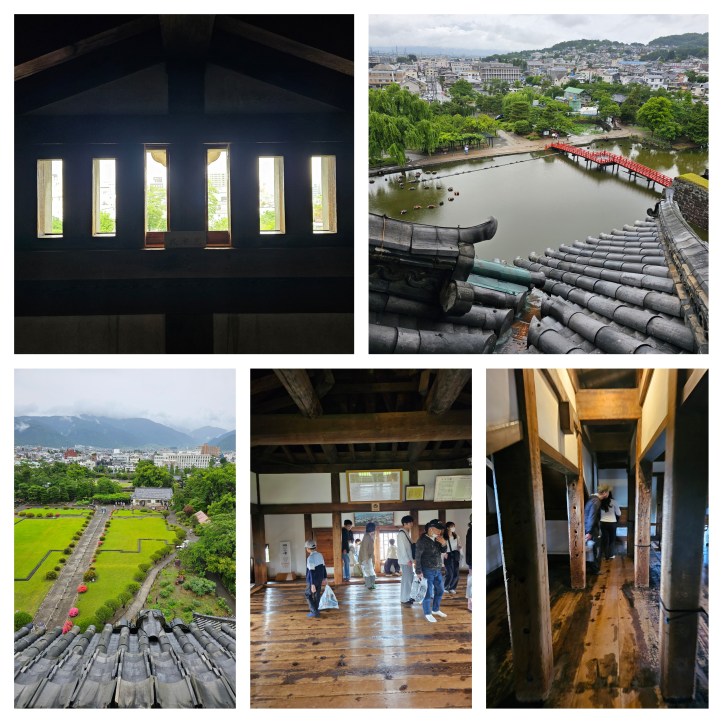
With this kind of warfare in mind, three structures, the main keep, Inui Keep, and Watari Tower, were built at the end of the Warring States Period. Then, 40 years later, at the beginning of the Edo Period, in a peaceful time, Tatsumitsuke Tower and Tsukimi Tower were constructed with almost no defenses. It was a different age.

Matsumoto Castle is a complex structure, with many connecting passages between the keep and the towers. This combination of structures from the Warring States Period and Edo Period, two different eras, with structures from each, is unique in Japan, and is one of Matsumoto Castle’s special characteristics.

This is one of the oldest castles in Japan. Fortification of the site dates back to simple wooden structures built during the Warring States period (1467-1600). The towering castle was constructed in 1594, and today it is the oldest surviving example of a castle with five external stories but six internal floors.

Matsumoto Castle is also known as the Crow Castle because of its black colored exterior.
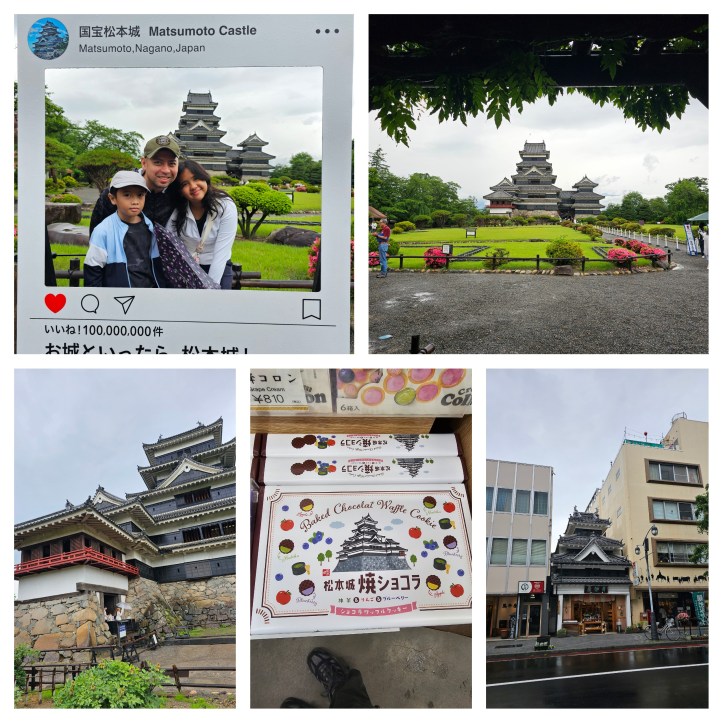
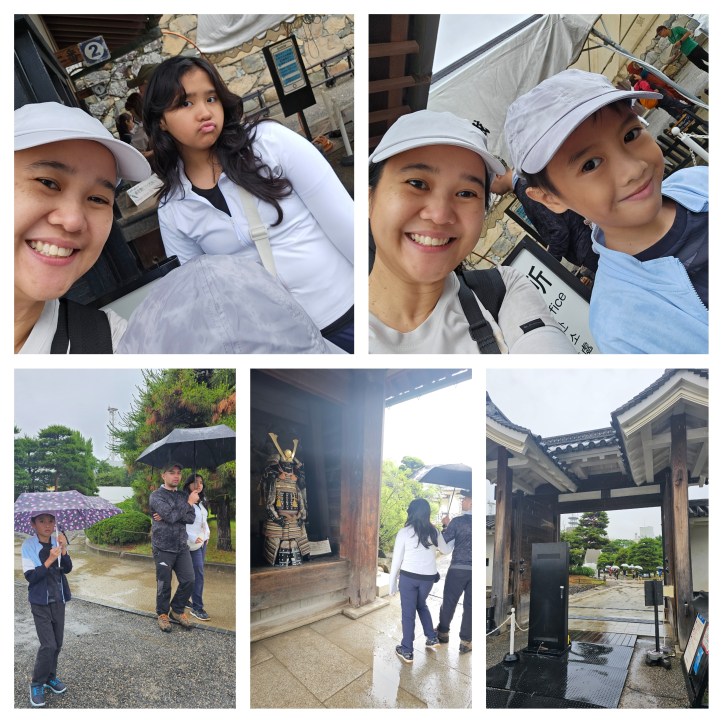
We saw a small castle-themed store as we walked back to the station. 🙂 And that is our quick visit to the great and intimidating looking Matsumoto Castle. We are so glad we visited this place before heading back to Tokyo. An unexpected surprise trip indeed. 🙂
 Where Did We Go